Donate Newsletters
Home » Climate + Energy » Fossil Fuel Transition » Understanding the North American Tar Sands

Understanding the North American Tar Sands

SwatchJunkies

January 14, 2015

[prettyquote]”You put a big black blob in the middle of Canada, and you reach out a tentacle to every part of the Coast, there is a giant octopus that is essentially wrapping its tentacles around North America.”[/prettyquote]

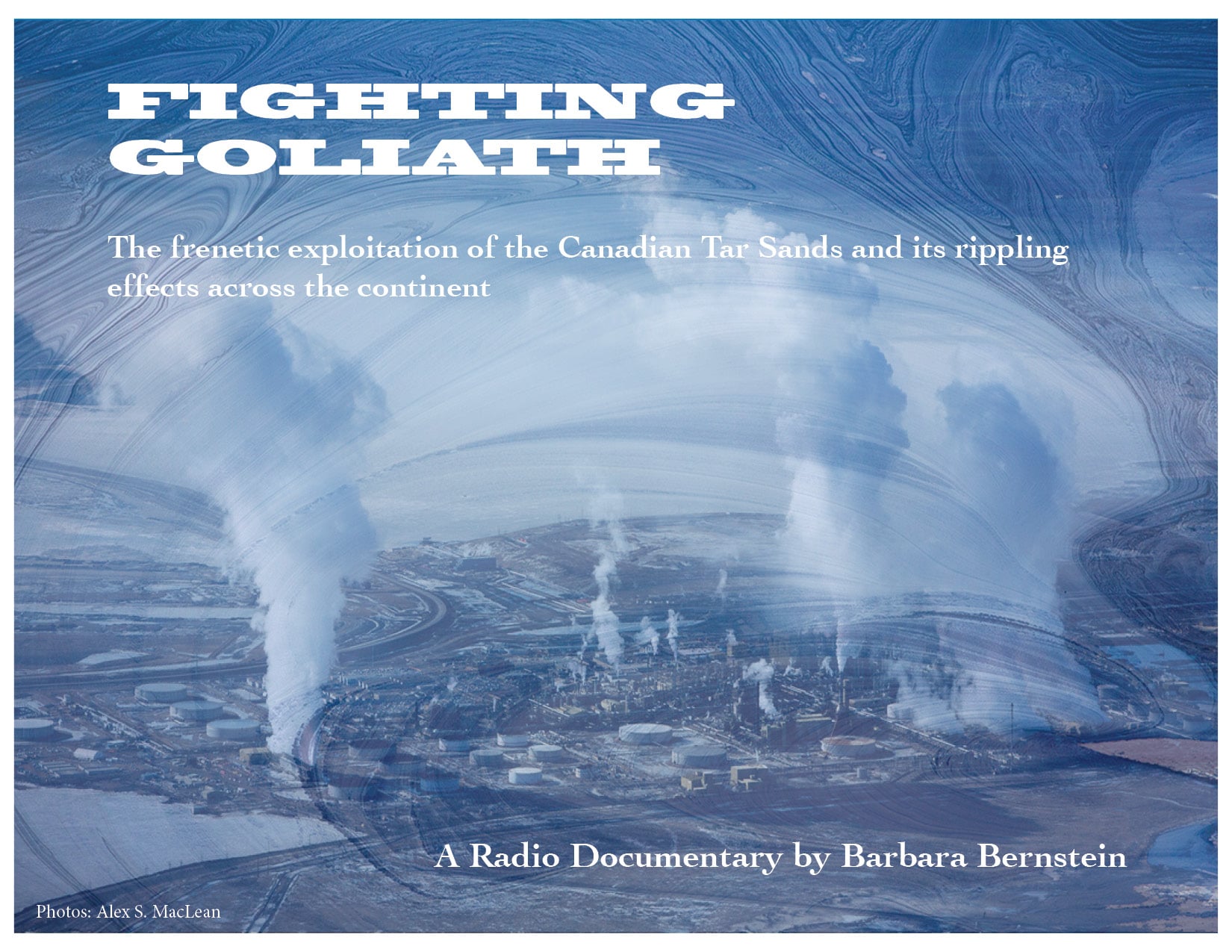
Last year, Portland’s KBOO Community Radio profiled what is “the largest industrial project on Earth”: the North American tar sands. Typically, one hears of the “Canadian tar sands,” as if the issue is one that lives only north of the US national border and need not concern American citizens. But reporter Barbara Bernstein’s documentary, “Fighting Goliath,” revealed an alarming and very real threat that deserves the same scrutiny as the coal export and oil train schemes better known in the Northwest and Plains states.

However, this is not just an account of the tar sands as a sprawling behemoth, from their massive open pit mines to their toxic tailings ponds, from their environmentally sensitive transport routes to their huge water needs and giant equipment and infrastructure demands. Bernstein also tells the story of a powerful and diverse group of citizens who came together to oppose tar sands expansion in the corporate interest and to demand accountability from government officials in responding to the public’s concerns.

It’s the most riveting hour of radio you’ll hear for a while, guaranteed. Listen in.
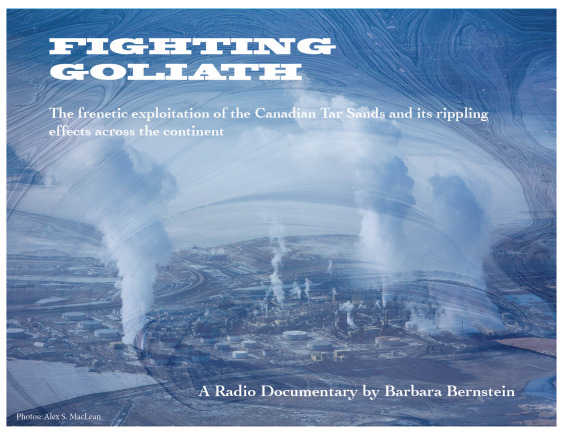
Fighting Goliath Poster, Photos by Alex S. MacLean
Fighting Goliath Poster by KBOO Community Radio (Used with permission.)

Talk to the Author

SwatchJunkies

Talk to the Author

Serena Larkin

Serena Larkin is Sightline’s Senior Director of Communications, driving a comprehensive content strategy for the organization's research.

About Sightline

Sightline Institute is an independent, nonpartisan, nonprofit think tank providing leading original analysis of democracy, energy, and housing policy in the Pacific Northwest, Alaska, British Columbia, and beyond.

For press inquiries and interview requests, please contact Martina Pansze.

Sightline Institute is a 501(c)3 non-profit organization and does not support, endorse, or oppose any candidate or political party.

See an error? Have a question?

Find the author's contact information on our staff page to reach out to them, or send a message to editor@sightline.org.

Thanks to Mitch Friedman for supporting a sustainable Cascadia.

Our work is made possible by the generosity of people like you.

×
Privacy Overview
Sightline Institute

More information about our privacy notice

Strictly Necessary Cookies

Strictly Necessary Cookie should be enabled at all times so that we can save your preferences for cookie settings.

3rd Party Cookies

This website uses Google Analytics to collect anonymous information such as the number of visitors to the site, and the most popular pages.

Keeping this cookie enabled helps us to improve our website.

Additional Cookies

This website uses social media to collect anonymous information such as which platform are our users coming from.

Keeping this cookie enabled helps us better reach our audiences.