
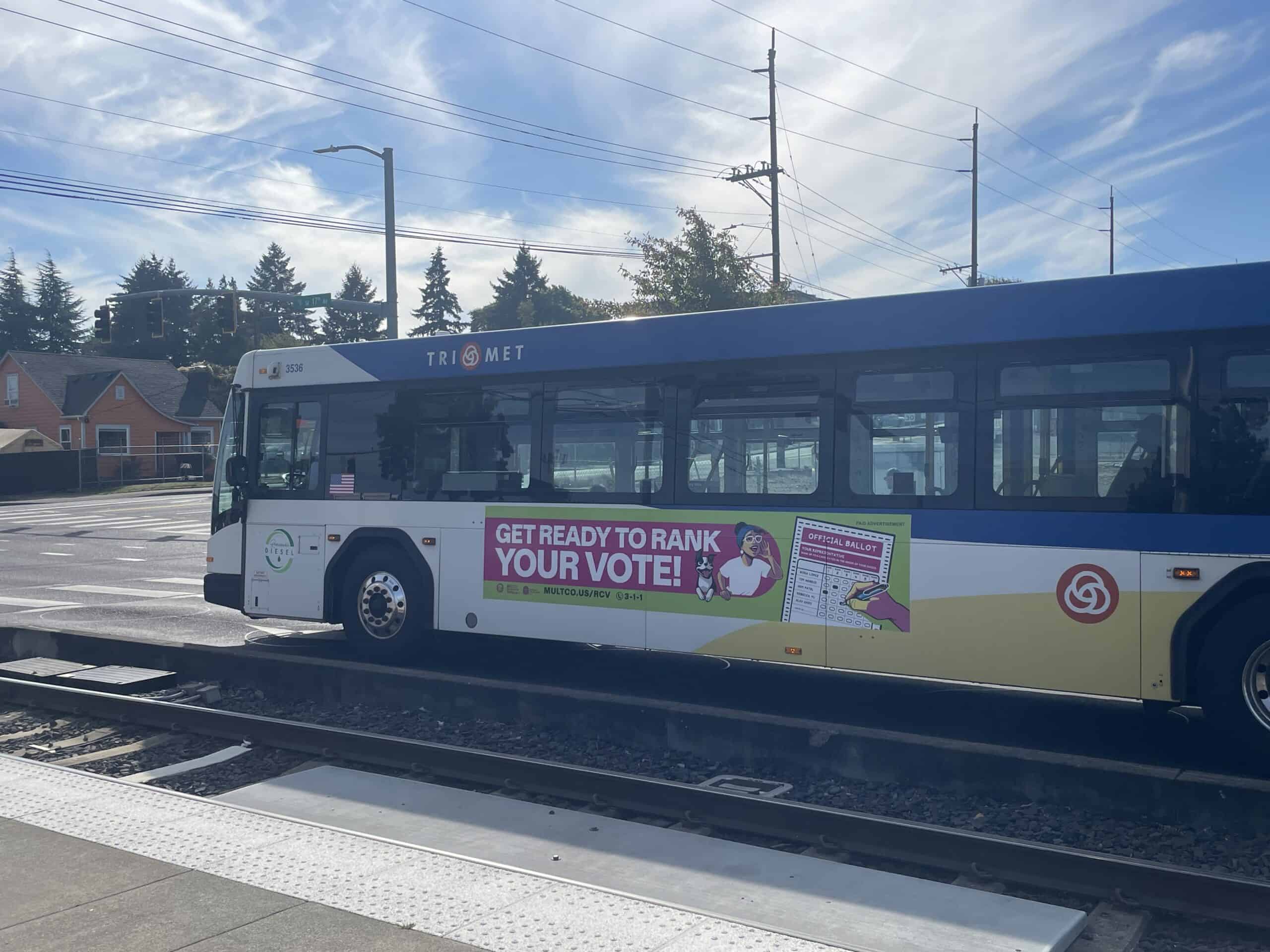
Voters in Portland, Oregon overhauled their city government and elections in 2022. They chose to increase their City Council to 12 seats, with 3 members elected in each of 4 districts using multi-winner ranked choice voting. Voters also opted for single-winner ranked choice voting for mayor and a new professional city administrator to manage day-to-day operations. Portland first implemented the new election model in November 2024, with council and the mayor taking office in January 2025.
Political science professor Dr. Ellen Seljan jumped on the opportunity to study the new model. Dr. Seljan’s research at Portland-area Lewis and Clark College focuses on state and local politics, including election administration and voting reforms such as automatic voter registration.
Dr. Seljan and her colleagues Todd Lochner, Ben Gaskins, and Leah Gilbert found that Portland’s inaugural proportional ranked choice voting elections in 2024 had notable differences from the comparable 2020 presidential election before the new system was implemented. In 2024, the number of organizations making endorsements nearly quadrupled, campaign spending dropped, and money didn’t predict the winner as reliably as it could in 2020.
Sightline’s full discussion with Dr. Seljan below.
What interested you in studying Portland’s elections?
Portland’s recent electoral changes, adopted in 2022 and first implemented in 2024, were truly monumental. Very few cities use proportional ranked choice voting, considered by many scholars as the “gold standard” of democratic representation, and Portland is the largest city in this field. Indeed, only a few countries, Ireland and Malta being the most prominent examples, use this electoral system at all, and they do so in a partisan context so it is very different. That left scholars, practitioners, and voters like me curious about the potential effects of these important changes. Electoral changes are known to consistently affect voter behavior, candidate strategy, and electoral outcomes.
Where have you focused your research so far?
There were lots of potential avenues for research. Along with my coauthors at Lewis & Clark College, I chose to focus specifically on the City Council elections. We began our research by looking at patterns of voter turnout, errors, and roll-off (failing to cast a vote for every office on the ballot).
Interestingly, the patterns we found here did not depart dramatically from previous Portland City Council elections. We also analyzed the characteristics of candidates, including their demographic backgrounds and geographic distribution, to assess changes associated with the adoption of ranked choice voting. Lately we have been really interested in how the electoral changes affected both the endorsement environment and how voters used endorsements.
What have you learned about the role of endorsements in Portland’s election?
The scale of organizational endorsement activity in 2024 was categorically larger than in 2020. Even though there were more candidates, on average candidates received significantly more endorsements from organized groups and elected officials compared to previous years. The number of organizations making endorsements nearly quadrupled, and endorsements were spread across a much wider range of candidates rather than concentrating in a few.
We think endorsing groups thought that the value of their endorsements increased with the electoral changes. Part of this story is structural: An endorsement boost that was insufficient to push a candidate over 50 percent in 2020 may be enough to reach the 25 percent threshold in 2024. With a lower threshold, more groups thought they could support actual winners, not just favorable candidates.
Further, because multiple candidates can win simultaneously in the same district, organizations backing several candidates no longer faced a coordination problem. We do have some evidence that voters relied on endorsements more than in previous city council elections as well, though the change here was less dramatic than changes to the endorsing environment: Endorsements have always been an important factor for voters in local, nonpartisan races.
What about the role of money?
The dollars spent to win a city council seat dropped from an average of $443,386 in 2020 to $140,971 in 2024. Campaign spending also had a smaller marginal effect on vote share in 2024 than in 2020, and the candidates who won in 2024 tended to do better than their spending levels alone would predict. While low spending was consistently associated with electoral losses, not every candidate who spent big won under the new system. Here it is hard to make a causal claim about proportional ranked choice voting and these differences—there may be an effect, but the changes are difficult to disentangle from the move to district elections or the increased uptake in participation in Portland’s Small Donor Elections program.
Did you observe any notable changes in candidate demographics?
The 2024 candidate pool was, by some measures, less diverse than the 2020 field: The share of BIPOC candidates declined from 29 percent to 19 percent, and the share of women and non-binary candidates fell from 40 percent to 27 percent. But the electoral outcomes tell a different story: Women won 6 of 12 council seats (50 percent) despite comprising just over a quarter of candidates, and BIPOC candidates won 5 of 12 seats (42 percent), also outperforming their share of the candidate pool. The most pronounced demographic shift was actually age: The 2024 candidate pool was both younger on average and much more age-diverse than 2020, ranging from 22 to 87 years old.
Women won 6 of 12 council seats (50 percent) despite comprising just over a quarter of candidates, and BIPOC candidates won 5 of 12 seats (42 percent), also outperforming their share of the candidate pool.
Are there any other trends you want to highlight?
One trend that is interesting is the ideological shift on the council. After the first proportional ranked choice voting elections, six of the twelve councilmembers formed what’s been called the “Peacock” bloc—short for “Progressive Caucus”—to counter more moderate councilors. City councilors have become dramatically more divided in their voting patterns: Whereas the norm used to be unanimous votes, division is far more present in recent rollcalls. It is interesting to note that we also saw an increase in “ideological lanes” in the endorsement environment as well; there were far more multi-issue, ideological endorsers in 2024 compared to 2020. Political scientists would have expected more ideological diversity with the move to proportional ranked choice voting, and that certainly seems to be the case.
Related: Five Early Conclusions About Portland’s Refreshed City Council | Facing its first round of re-elections, Portland’s proportional city council record is mixed—but promising.
What are you looking forward to investigating next?
We are excited to add more data from this upcoming election to our research. Whenever there is a big change, there can be a “novelty” effect, where just the fact there was a change in the system—any change— affects outcomes, not the policy itself. It will be interesting to see how endorsing groups, candidates, and voters respond to this system in the longer term and whether the changes we saw in this last election are indeed permanent.

