Donate Newsletters

Legalizing Inexpensive Housing

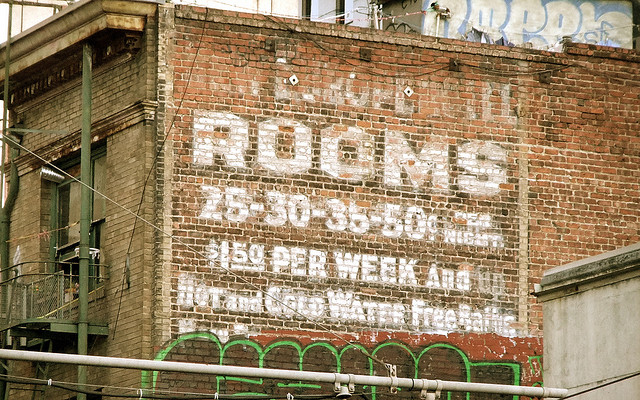
Old sign painted on brick building "Rooms 25 - 50 cents per night, $1.50 per week."

A month ago, the Seattle City Council passed the latest in more than a century of laws across the Northwest and beyond to improve the safety and health conditions of rental housing. Without a single “no” vote, council members required all landlords to register their units and submit to periodic inspections.

A bold victory for sustainable communities? I’m not sure. I do not know enough about the particulars of this policy to pass judgment on it. But it makes me nervous. In fact, I fear it is a move in exactly the opposite direction from where housing policy ought to be going. Where it ought to be going is toward repealing a raft of restrictions that effectively ban inexpensive housing in complete, compact communities. Repealing these rules, I believe, is the single largest sustainability opportunity that most cities have within their legal authority.

Read more

Your Monday Afternoon Viewing

Streetfilms, an organization creating short videos about smart transportation infrastructure that improves our streets, has produce two new videos about Vancouver, BC. Both are worth a few minutes of your time.

The first takes a look at how the city improved safety on its bikeways, encouraging folks of all ages to get on a bike:

Read more

Chinese Guestworkers Head Into BC Coal Mines

This is surely one of the stranger dimensions of the coal export saga we’ve been cataloging: the Canadian government is approving guest-worker status for as many as 2,000 Chinese nationals to extract coal from British Columbia’s underground mines.

As the Vancouver Sun reports:

Canadians “just don’t have the experience” operating the equipment needed to safely extract coal in underground mines, said John Cavanagh, chief executive of Vancouver-based Canadian Dehua International Mines Group Inc., a company founded by China-born Vancouver businessman Naishun Liu.

Understandably, Canada’s unions are not exactly thrilled with the idea:

Read more

Car Sharing Olympics Reconsidered

What a difference a few months make!

At the end of July, we gave Vancouver, BC the gold medal in our “Northwest Car Sharing Olympics.” Vancouver edged out Portland in our rankings, largely because Vancouver had three mature car sharing services with a variety of pricing and membership models. Portland also had three services; but its peer-to-peer car sharing service, Getaround, was just getting off the ground, with only about 70 cars available for short-term rental at the time we looked.

Fast forward just two and a half months, and Getaround’s car availability has nearly quintupled.  The service currently offers 328 cars in greater Portland, including both the city and the suburbs.

Dude, Where Are My Cars: Port Mann Bridge

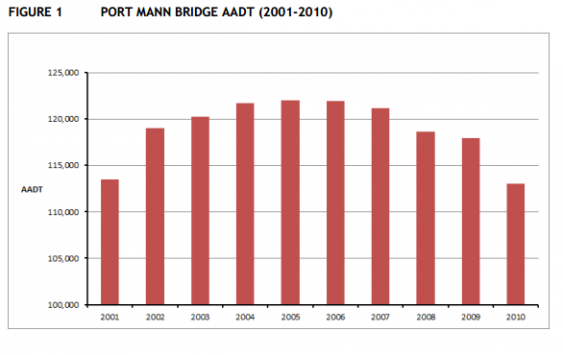
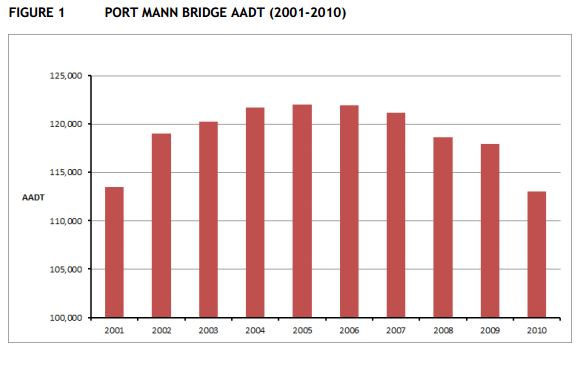
Unsurprisingly to regular readers of this blog, traffic on the Port Mann Bridge in Surrey, BC peaked in 2005, and then fell modestly but steadily through 2010.

That said, there’s no telling what this means for the future. A new, 10-lane Port Mann Bridge—certified by the Guiness Book as the widest bridge in the world—is nearing completion, and three lanes of the bridge have already been opened to traffic. A wider Port Mann crossing will likely be less congested than the current bridge, at least at first; and history has shown that free-flowing urban highways tend to attract new drivers. But it’s also tolled bridge—$1.50 each way for the first year, $3.00 and potentially rising with inflation thereafter—and tolling tends to reduce traffic volumes. Toss in some uncertainties around oil prices, vehicle efficiency, land use, and government policy, and there’s just no telling what the future traffic trajectory might be.

Read more

Northwest Car-Sharing Olympics

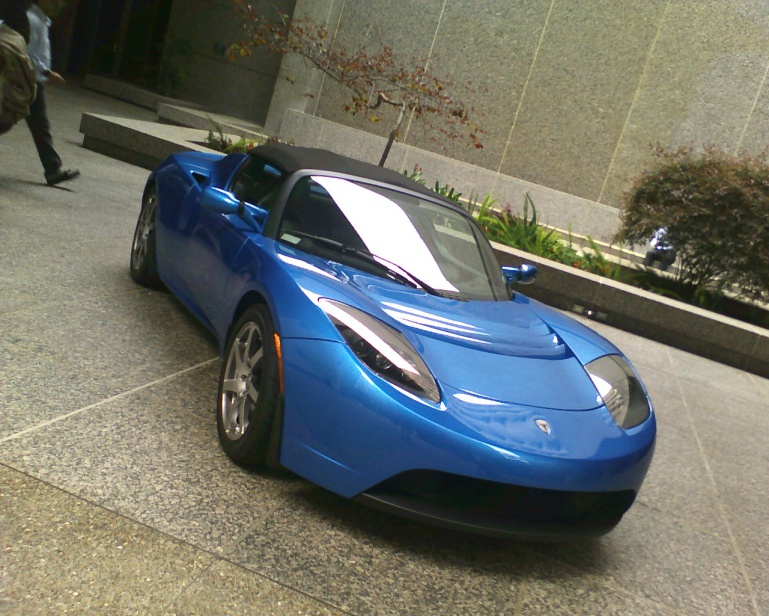
Zipcar. Car2Go. Getaround. Modo. Throughout the Northwest, car-sharing services are taking off. Residents in major Northwest cities who are looking to live a “car-lite” lifestyle—but who still need to get behind the wheel from time to time—now have a number of options for shared vehicles.

Car-sharing services offer abundant, convenient vehicle options, distributed widely around major metro regions—so that drivers have easy access to cars when they need them, without shouldering all the costs of ownership.

As car sharing catches on and states pass legislation to remove barriers, companies are vying to enter new markets. In this Northwest free-for-all, which big city is taking home the gold?

The Emerald City seems set on the bronze: it’s got one good car-sharing option, but fewer companies, vehicles, and pricing options than either of its neighbors. It’s a tight race between Vancouver and Portland for the gold…but in the end, we have to give Vancouver the nod.

Here are the details.

Read more

Transit Smackdown: Seattle vs. Portland vs. Vancouver

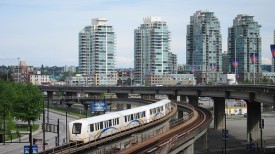
Vancouver's skytrain
AaverageJoe, flickr

A little while back, we took a look at commuting in Seattle vs. Portland—and found, perhaps unexpectedly, that Seattle had a heck of a lot more transit commuting than Portland.

But that comparison only looked at work trips, and only trips within the city limits of Portland and Seattle. So what about the metro areas as a whole—and transit for all trips, not just trips to work?? The National Transit Database offers some clues…and as it turns out, for total transit ridership the Portland metro area may edge out greater Seattle.

But neither Portland nor Seattle can hold a candle to greater Vancouver, BC.

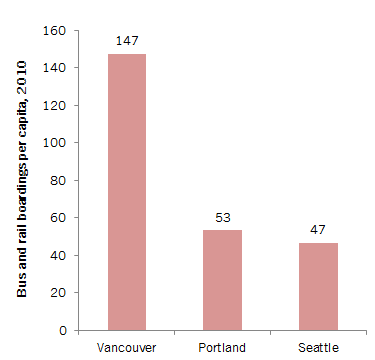
The simplest comparison among the three cities looks at the average number of bus and rail transit boardings per person, per year, in the entire metro area. And on that measure, Vancouver vastly outstrips its two southern neighbors.

Read more

Why US Coal Can’t Ship From Canada

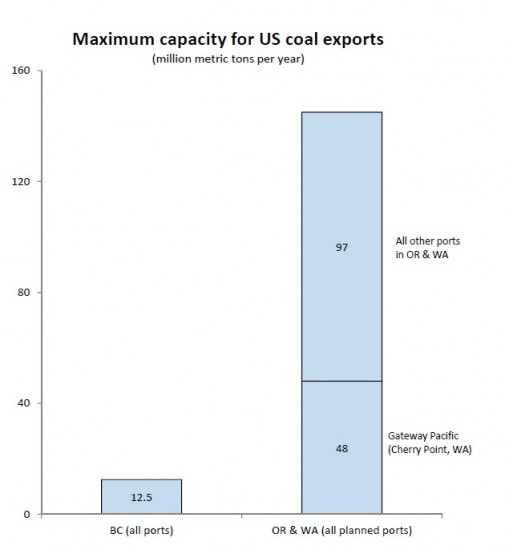
Sightline has an updated new a research memo, “Coal Exports From Canada” that documents the facts about Canada’s coal exporting capacity. The truth is that ports in British Columbia do not have sufficient capacity to handle the volumes of coal planned for Washington ports.

It’s not even close.

The state coal lobby continues to claim that US coal exports will simply shift to BC if Washington doesn’t build its own export facilities. But it’s simply not true.

The full details and analysis are here.

×
Privacy Overview
Sightline Institute

More information about our privacy notice

Strictly Necessary Cookies

Strictly Necessary Cookie should be enabled at all times so that we can save your preferences for cookie settings.

3rd Party Cookies

This website uses Google Analytics to collect anonymous information such as the number of visitors to the site, and the most popular pages.

Keeping this cookie enabled helps us to improve our website.

Additional Cookies

This website uses social media to collect anonymous information such as which platform are our users coming from.

Keeping this cookie enabled helps us better reach our audiences.