The temperate forests of the Pacific Northwest are the Olympic athletes of the carbon world. They can store more carbon, acre for acre, than nearly any ecosystem on earth. A single acre of old growth in the Oregon or Washington Cascades holds the equivalent of a year’s worth of emissions from 250 cars.
But most standard, plantation-style commercial forests in the region perform like once-premier athletes sidelined by injury: they hold less than a third the carbon of old-growth stands. In the face of mounting pressure to reduce emissions, this shortfall offers an opportunity.
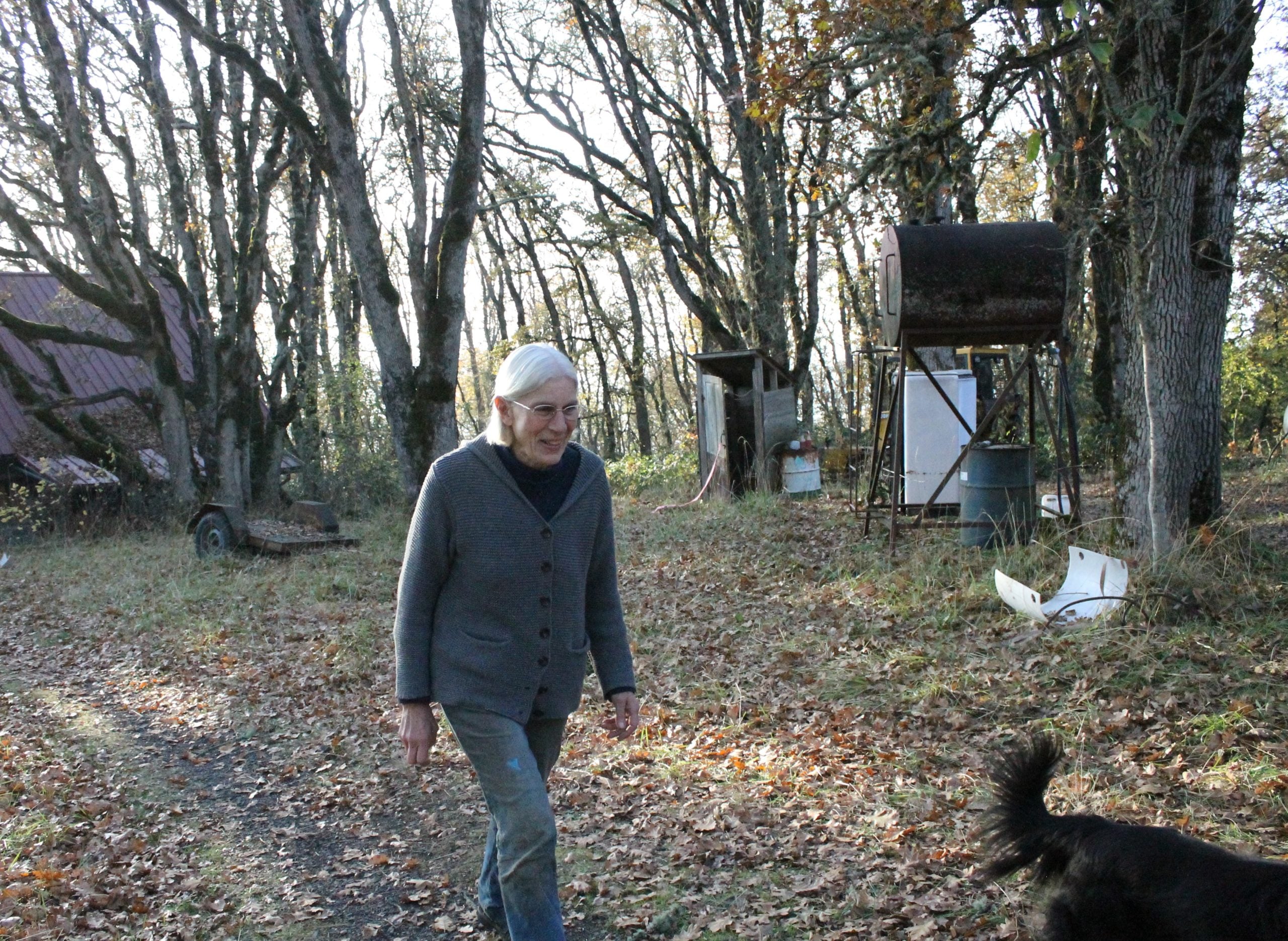
Sarah Deumling is one of a handful of foresters in the region harnessing more of the carbon drawdown potential of their land, modeling forestry for a rapidly warming world.

Sarah Deumling is one of a handful of foresters in the region harnessing more of the carbon drawdown potential of their land, modeling forestry for a rapidly warming world. Though she never attended forestry school, she has owned and managed Zena Forest—the largest remaining forest in Oregon’s Willamette Valley—for nearly three decades. Deumling’s unconventional training may be the reason Zena looks nothing like a typical logging operation, with a mix of tree species and ages, and an absence of clear cuts.
But the better returns for the climate come with a cost: it takes extra time and labor to manage Zena’s forests, discouraging most other foresters who might follow her lead. Shifting the Northwest’s forest industry to climate-friendly practices will require more than just good will.
The abridged carbon cycle of standard commercial forestry
Foresters in western Cascadia typically manage their stands at a quick clip—allowing about 45-year growth cycles between extractions. At harvest time, loggers usually clear cut, or heavily thin, leaving behind very few trees. Foresters clear cut forty to fifty percent of all commercially harvested acres in Oregon and Washington.
Each harvest cycle in a commercial operation resembles a breath—releasing and recapturing a steady carbon load. Carbon stores in these operations can remain relatively constant across cycles. But, when examined over the longer history of the forests, standard commercial operations bring to mind the frenetic and shallow pattern of hyperventilating. After a clear cut, forests need some 200 to 300 years to recapture their lost carbon. The quick clip of the harvest cycle in most commercial forest operations allows for only a partial refilling, less than one-third, of the forest’s full capacity between extractions.
After harvest, as much as 40 percent of the trees—the stems, needles, bark, roots, and other bits—remain on the forest floor, and, unlike in a more ecologically-managed forest, can become short-term emission sources. Commercial foresters commonly burn all this leftover debris, or else leave it in place to decompose rapidly without the protective canopy. Though these methods make way for new seedlings, they also damage the other carbon pools found in native forests—the squishy forest floor, living soil, and decomposing dead trees—which combined, commonly surpass the carbon stored in the logs hauled away.