Donate Newsletters

Have You Signed?

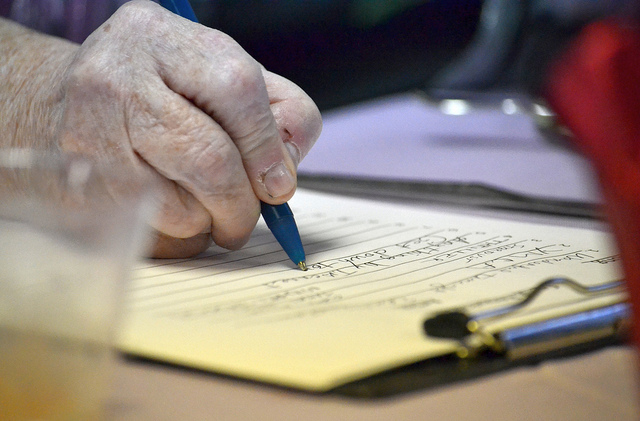
You know the drill. To get into the Safeway, you’re going to have to walk past the man with the clipboards. “Are you a registered voter?” he is asking you already, when you’re still 10 feet away. “Have you signed for…?” Whatever the pitch, it’s hard to decline, because he looked you in the eye and asked politely. It’s a small request. He’ll be here on the way out, too.

Who are these people? They’re paid signature gatherers. They travel from state to state, chasing the big initiatives, working as independent contractors for shady companies that reward them for each signature—a dollar or two or even more per valid signer. This petition derby yields intense incentives for gatherers to mislead voters, making the initiative sound sweeter than it is, and to engage in fraud, copying names from phone books, for example. But it’s also how the system works nowadays.

Citizens’ initiatives have become another business. Petitioning is no longer a test of popular ferment; it’s a test of sponsors’ money. As Western Washington University politics professor Todd Donovan says, “No one can get on the ballot unless they’ve got a million bucks.”

There are ways to mend this signature-gathering process, and they mostly focus on eliminating abuses. That’s the good news.

Read more

Disputing a Study on Coal Exports and Climate

I’ve never seen anything like this: an academic study that assumes that a privately held power company will continuously violate state and federal environmental laws.

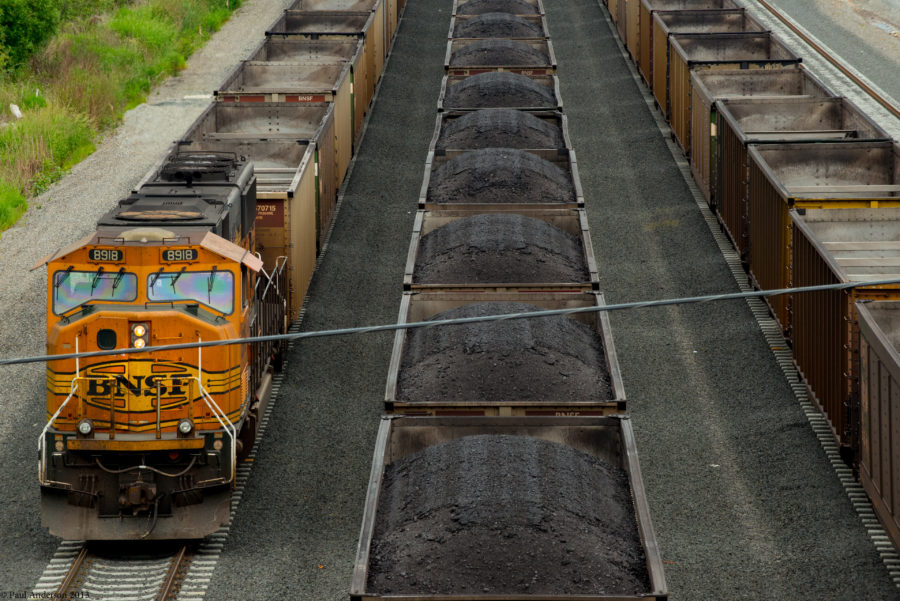
That’s just one of several surprising flaws in a recent paper by researchers from Duke University and the University of Calgary. The study purports to show that, under certain assumptions, exporting coal to Korea will reduce the amount of CO2 emitted per megawatt-hour of power produced globally. Yet the study is based on premises so absurd that they render the authors’ conclusions meaningless.

Read more

Climate Change in Plain Language

Editor’s note January 2017: Are you participating in this morning’s #ClimateFacts “Twitter storm” (details here)? We are! And we’ll look forward to keeping up the drumbeat for climate science and activism in years to come, on our Twitter feeds and elsewhere. Of course, how we message is just as important as what we message, so we’re … Read more

Canada vs. the USA on Oil Train Standards

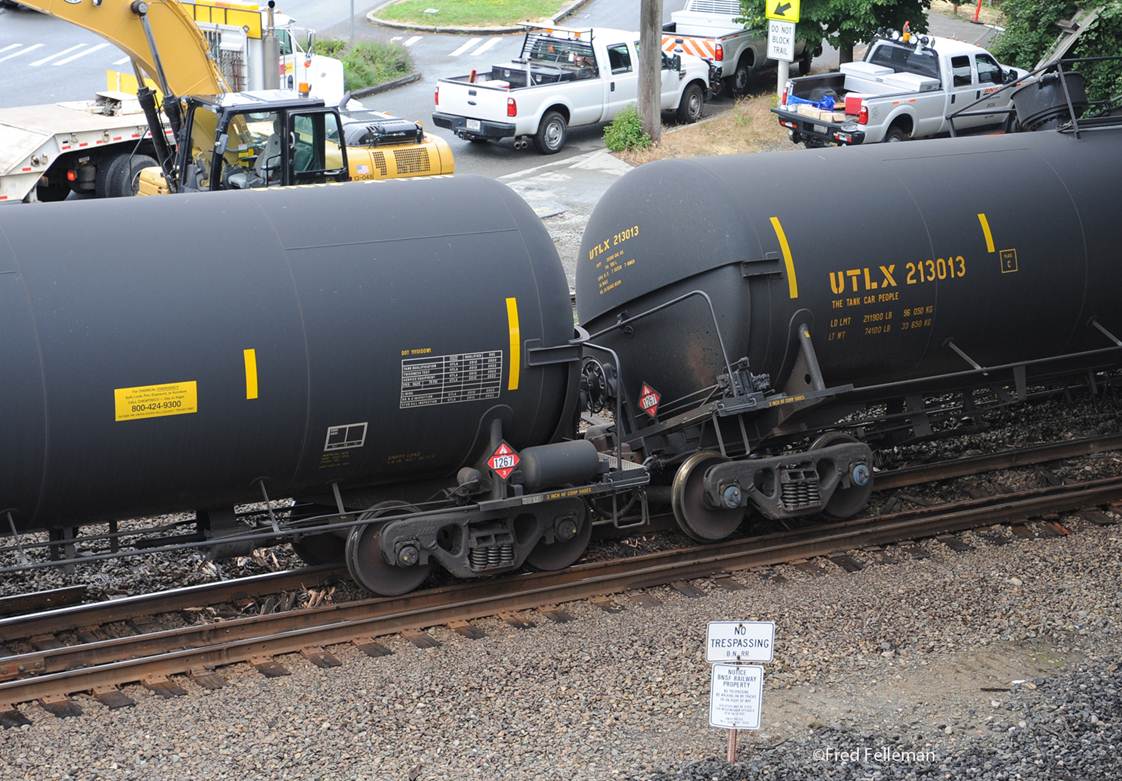
With what passes for chest-beating in the world of railway regulation, US politicians this summer claimed that the Transportation Department’s newly proposed crude oil, ethanol, and flammable materials train rules made the US Number One when it comes to tank car regulation—and that we are doing better than Canada. In his reading of a July … Read more

REPORT: Pacific Northwest Coal, Oil, and Gas Exports Would Have Carbon Equivalent of More than Five Keystone XL Pipelines

For immediate release: September 9, 2014 A new report from Seattle-based think tank Sightline Institute finds that new coal, oil, and gas shipments planned for the Pacific Northwest would carry more carbon annually than five Keystone XLs. The report’s author, Sightline policy director Eric de Place, calculates the carbon in active proposals across Oregon, Washington, … Read more

“If We Cannot Escape, Neither Will the Coal”

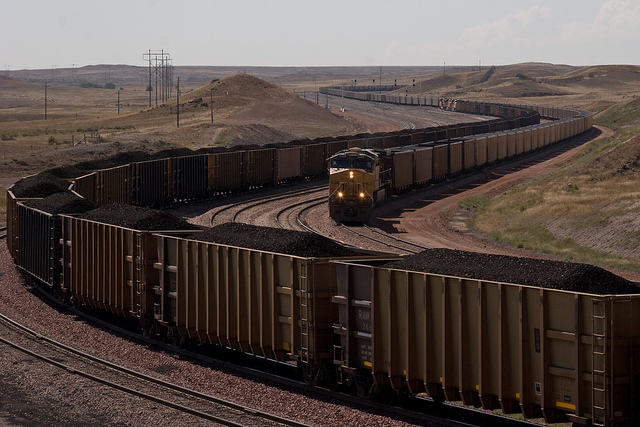
Across the Northwest, Native communities are refusing to stand idle in the face of unprecedented schemes to move coal, oil, and gas through the region. It’s a movement that could well have consequences for global energy markets, and even the pace of climate change. Now is a good moment for pausing to examine some of … Read more

Full Disclosure

Can’t the Northwest states just ban Big Money in citizens’ initiatives?

Unfortunately, the answer is no.

The US Supreme Court has forbidden limits on money for ballot measures, a lamentable state of affairs that may take a decade or more to reverse through favorable judicial appointments and new jurisprudence. That’s a long-term undertaking, but it’s an achievable one. The New York-based Brennan Center for Justice and others are already engaged in building the new legal philosophies and establishing precedents. (Unfortunately, current legal trends are moving in the opposite direction.) In the meantime, the Northwest can protect and strengthen its best-in-class rules for full disclosure of initiative funders. It can also join Iowa in making corporate boards or shareholders vote to authorize initiative spending.

SCOTUS on Initiatives

The timeline of federal court rulings is disheartening.

Read more

Initiative Inflation

We northwesterners tend to be proud of our direct democracy. We are the birthplace of the citizens’ initiative and pioneer of trend-setting ballot measures on everything from direct election of Senators to women’s suffrage, from death with dignity to marriage equality.

But behind this civic mythology lies a reality that is decidedly more mixed and worrisome. Initiatives do create a channel to circumvent sometimes-hapless or lobbyist-bound state houses, and they do allow breakthroughs on issues sometimes.

On the other hand, they also create tremendous opportunities for political mischief by playing on the public’s misperceptions. Just consider the many ill-conceived initiatives peddled by Tim Eyman in Washington or Bill Sizemore in Oregon. More generally, initiatives cost a fortune, are dominated by corporations and the 1 percent, and are now often played out as proxy battles in national policy wars that have little to do with the Northwest. They also leave the door open to unintended consequences.

Don’t get me wrong! For all their flaws, initiatives have sometimes yielded welcome changes. My father had greater peace of mind in his final months thanks to the death-with-dignity option approved by Washington voters in 2008; and I get to look forward to the possibility of attending weddings for all three of my children someday, thanks to marriage equality. (For the record, though, marriage equality was passed by the Washington legislature and affirmed by voters on a referendum forced by equality’s opponents. British Columbia and Oregon got marriage equality through the courts. So citizens’ initiatives were not key to marriage equality in Cascadia.)

[prettyquote align=”right”]”There’s no contradiction in cheering loudly for your team and still criticizing the rules of the game.” [/prettyquote]

Repeat: I am not disparaging initiatives; far from it. My argument is with the process, not all the outcomes. There’s no contradiction in cheering loudly for your team and still criticizing the rules of the game.

Read more

Measures of Money

Six hundred dollars.

That’s how much money residents of Washington State donated to the “No” campaign in the 2013 initiative concerning genetic engineering. The vote was not about banning the use of gene splicing techniques, nor about regulating them. It was not about warning consumers away from genetically modified products. It wasn’t even about studying the practice. All it proposed to do was require food products to indicate on their packaging whether they contained genetically altered ingredients. Not, you would think, the stuff of all-out war. In fact, it’s a rather milquetoast policy change.

Yet Big Ag treated the measure like Pearl Harbor; it sought to make an example of Washington’s I-522. The NO committee buried the proposition in $22 million of campaign cash. The biggest checks came from the Grocery Manufacturers (which collected it from Coke, Pepsi, and other junk food brands), Monsanto, and the agricultural arms of Dow, DuPont, and Bayer.

That’s more money than any initiative campaign, pro or con, had ever spent in the Northwest. It’s more than Jay Inslee or Rob McKenna spent running for governor. In fact, it’s not far off from what those two men spent together. It’s substantially more than the collective campaign budgets of every single candidate for the state house in 2012. And every one of those $22 million went to decide whether Coke bottles, for example, might have to say somewhere on them, “Partially produced with genetic engineering.”

This story neatly encapsulates the state of initiative politics in the Northwest nowadays. In the words of the Seattle Post-Intelligencer’s Joel Connelly, dean of Cascadian political reporters, “Citizens have a right to put something on the ballot, and special interests have the right to spend a fortune beating up on it, which usually works.”

Read more

Ambre Energy’s Troubled History: Greatest Hits Edition!

In case you missed the news on Monday, the Oregon Department of State Lands denied a crucial permit for Ambre Energy’s plans to build a coal export terminal along the Columbia River capable of shipping 8.8 million tons per year.

It’s hard to overstate the significance of this ruling. It’s the first major regulatory decision on any coal terminal permit in the Northwest states. It was an unambiguous victory for opponents of coal export terminals, particularly the tribes that have been so vocally opposed to coal export facilities on the Columbia. And it foreshadows the likely outcomes for the much larger, more complex, and higher-impact projects that are still in the early stages of the permitting process.

Though the company may appeal the decision, the odds are stacked against Ambre: the path forward is unclear and likely lengthy; the company is struggling to raise sufficient additional financing; international coal prices are low; and recent developments in Asia show uncertain demand for US exports.

Of course, none of this is news to Sightline readers. You’ve been reading about Ambre’s shaky finances since late 2012, and the news has only gotten worse. It’s been a long road, but with this happy event, we can’t help but take a fond look back (and yes, feel free to crank up some victory tunes) at some of the research that helped get us here:

Read more

×