

MEDIA CONTACT: Catie Gould, Sightline Institute, catie@sightline.org
OLYMPIA, WA – Washington’s Parking Reform and Modernization Act, SB 5184, was passed by the state House of Representatives on Friday, April 11 in a 64 – 31 bipartisan vote. It is one of the strongest parking reform packages attempted anywhere in the United States.
Sightline Institute senior researcher Catie Gould, who helped draft and advocate for the bill, is thrilled for the benefits the bill will deliver for Washingtonians: “This common-sense reform is long overdue. This will make it easier to build homes at lower costs and increase opportunities for small businesses around the state.” (Gould is available for interview and comment.)
The bill, introduced by Senator Jessica Bateman, was supported by a coalition of over 40 Washington groups, including affordable housing providers, labor unions, environmental groups, elected officials, and real estate associations.
The newly passed Parking Reform and Modernization Act:
- Caps parking mandates for new residential buildings.No more than 0.5 parking spaces can be required per home and 1 per single-detached house, allowing multifamily building residents—who don’t own a car—to forgo paying for parking they won’t use.
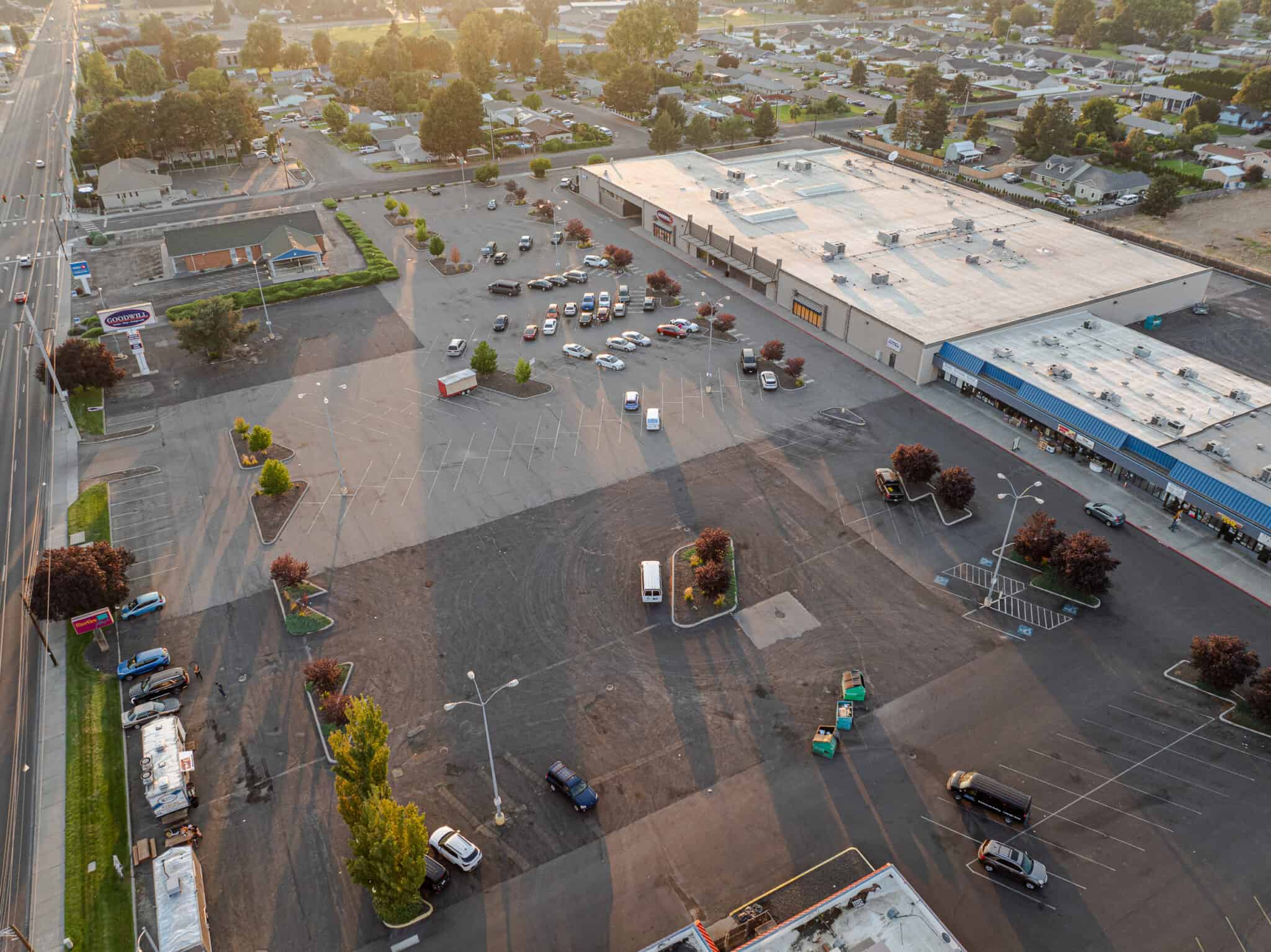
- Caps commercial mandates to provide relief for businesses. Parking mandates are a tax on businesses that limit opportunities for new establishments, expansions of successful businesses, conversions of historic buildings, and other uses. The bill limits commercial mandates to 2 parking space per 1,000 square feet, meaning local rules couldn’t force businesses to allot more space to parking cars than their actual business (the average parking space is 330 sq ft).
- Provides full parking flexibility for certain building types. SB 5184 exempts select building uses from mandates, including buildings undergoing a change of use (like from an office to a coffee shop), senior housing, affordable housing, daycares, and ground-floor spaces in mixed-use buildings.
- Potentially adds more ADA-accessible parking spaces. An amendment directs the state building code council to study and, if needed, update parking requirements to better align with current disability rates.
- Applies to over 74 percent of cities statewide (those with a population of 30,000 or greater).
Gould has researched and published extensively on the benefits of parking reform and flexibility, including an influential report analyzing the costs of parking mandates across 54 Washington jurisdictions, representing where 75 percent of the state’s population lives; and lists of the state’s most parking-costly jurisdictions for renters and for opening a business, restaurant, or daycare.
Gould is available to comment on her research and on details of the state legislation.
###
Catie Gould is a senior transportation researcher for Sightline Institute, specializing in parking policy. Find her latest research here, and follow her on Bluesky.
Sightline Institute is an independent, nonpartisan, nonprofit think tank providing leading original analysis of housing, democracy, energy, and forests policy in the Pacific Northwest, Alaska, British Columbia, and beyond.
