Donate Newsletters

Do Coal Investors Really Care About Exports?

Powder River Basin coal mining firm Cloud Peak suffered through a stock sell-off today after the company announced that it would be shipping a bit less coal this year than it had expected to. Previously, the company had said that it would sell between 85 and 89 million tons through the end of the year. But because of poor performance by rail companies—particularly BNSF, which has clogged its rail lines with dangerous oil trains—Cloud Peak can only hope to deliver between 83 and 86 million tons in 2014.

Cloud Peak’s announcement sent investors heading for the exits, with the company’s stock price declining by 8 percent in an hour. To me, that seemed like an outsized reaction, given that the problems with BNSF rail congestion were well understood, and would cut Cloud Peak’s annual production by only about 3 percent.

But the quick downturn shows just how little it takes these days to shake investors’ confidence in the coal industry.

Read more

Ambre Energy’s Troubled History: Greatest Hits Edition!

In case you missed the news on Monday, the Oregon Department of State Lands denied a crucial permit for Ambre Energy’s plans to build a coal export terminal along the Columbia River capable of shipping 8.8 million tons per year.

It’s hard to overstate the significance of this ruling. It’s the first major regulatory decision on any coal terminal permit in the Northwest states. It was an unambiguous victory for opponents of coal export terminals, particularly the tribes that have been so vocally opposed to coal export facilities on the Columbia. And it foreshadows the likely outcomes for the much larger, more complex, and higher-impact projects that are still in the early stages of the permitting process.

Though the company may appeal the decision, the odds are stacked against Ambre: the path forward is unclear and likely lengthy; the company is struggling to raise sufficient additional financing; international coal prices are low; and recent developments in Asia show uncertain demand for US exports.

Of course, none of this is news to Sightline readers. You’ve been reading about Ambre’s shaky finances since late 2012, and the news has only gotten worse. It’s been a long road, but with this happy event, we can’t help but take a fond look back (and yes, feel free to crank up some victory tunes) at some of the research that helped get us here:

Read more

EVENTS: Coal & Oil Trains in Bellingham, Everett

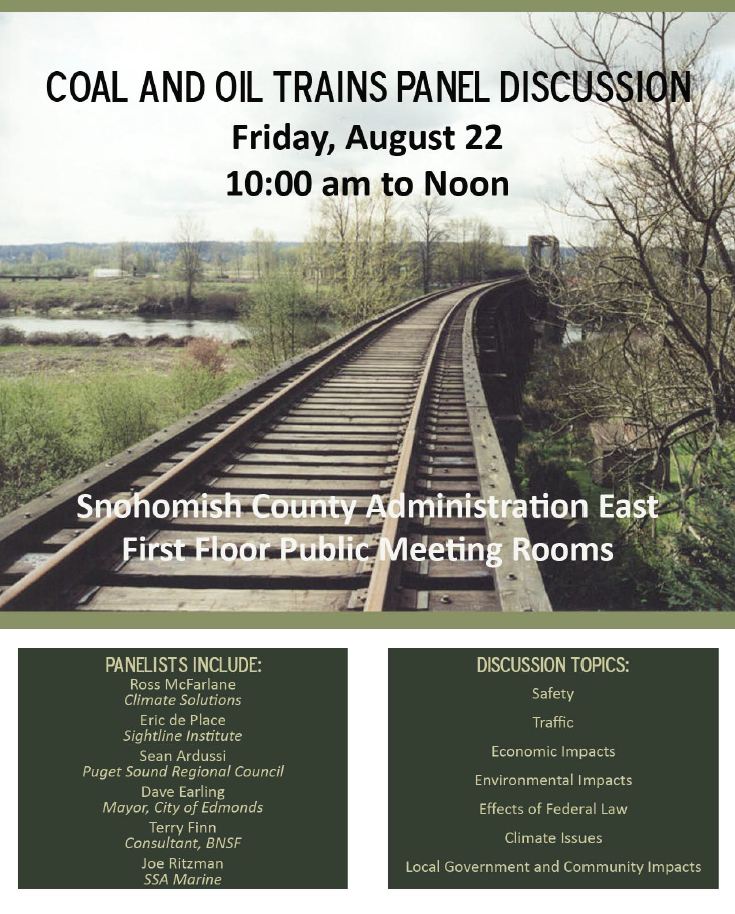
I’ll be participating in two panel talks on coal and oil trains, one this Friday and one next week. Both promise to be interesting. Everett This Friday, come ask your toughest questions at a free, public panel discussion on coal and oil trains. I’ll be joining Ross Macfarlane of Climate Solutions, Sean Ardussi of Puget … Read more

Warren Buffett Really Likes Oil Trains

Editor’s note: This article was originally published at VICE News and is republished here with permission.

The people in the Musi-Café had no idea what hit them. At about 1 a.m. on July 6, 2013, a train parked on a slope a couple miles away slipped its brakes. Seventy-two tank cars loaded with crude oil accelerated into the town of Lac-Mégantic, Quebec and began to tumble off the tracks, detonating and burning with a force so powerful that it leveled several city blocks. Forty-seven people were killed—most of whom were inside the Musi-Café.

In the months that followed, Lac-Mégantic became a rallying cry, a bloody shirt waved by activists across North America who were growing increasingly concerned about a relatively new phenomenon: ultra-long trains loaded with a peculiar variety of crude oil.

Months later, after several other oil train accidents, Warren Buffett went on CNBC claiming that oil train explosions were “very, very, very, very rare.”

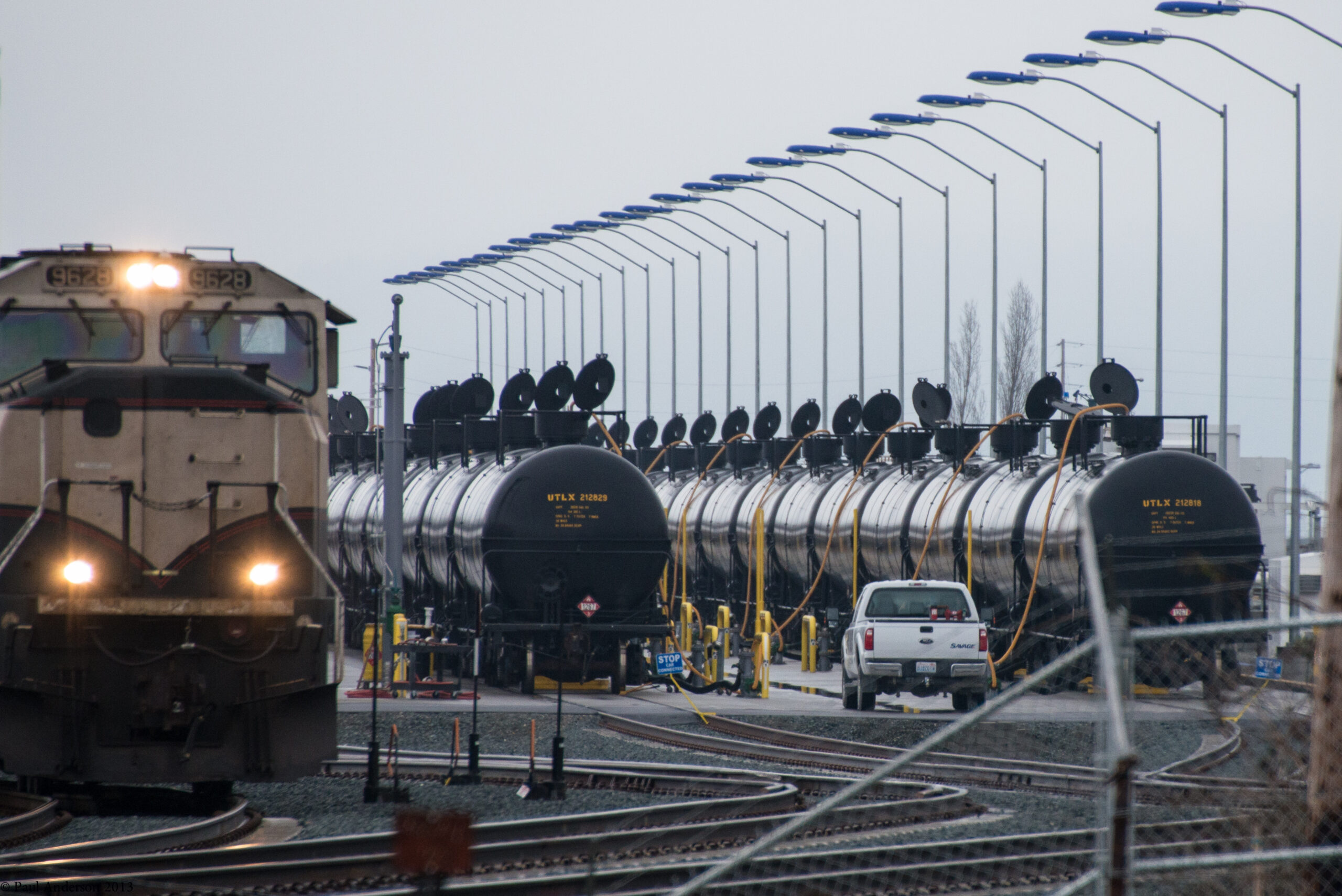
If Buffett sounded defensive, it may have been because he is the single most important person in the world of oil-by-rail, an industry that he dominates and that has proven to be highly profitable for oil companies and railroads—and singularly dangerous to the public.

Read more

Proposed Oil Train Rules: The Good, The Bad and The Ugly

On July 23, the federal regulatory agencies in charge of oil trains released the details of a rulemaking proposal to improve the safety of moving large quantities of flammable materials by rail, particularly crude oil and ethanol. Oil trains have been the subject of increasing worry after five separate derailments in the past year unleashed towering infernos. The recent announcement opened up a sixty-day comment period after which the US Pipeline and Hazardous Materials Safety Administration (PHMSA) will issue a set of final rules.

In our judgment most media coverage of the proposed regulations has been rather credulous, overlooking several important dimensions and ignoring some glaring flaws. (One counterexample is Joel Connelly’s coverage at Seattle P-I.) So to correct the record, here is Sightline’s take on the good, the bad, and the ugly in the new proposed tank car standards.

The Good

  • The proposed rules have been released sooner than expected. Many industry observers speculated that this rulemaking process, which started in September 2013, would drag on much longer.
  • The draft rules are fairly comprehensive, addressing many of the unique safety issues of unit trains carrying oil or ethanol, including questions about how oil producers classify their crude, how train braking systems operate, how emergency responders are to be notified, emergency response planning, rail routing, and train speeds. Among the most closely watched issues are rules that will set standards for new-built and retrofitted tank cars.
  • PHMSA concurrently released a report summarizing an analysis of Bakken crude oil. Unsurprisingly, the federal data show that crude oil from the Bakken region in North Dakota tends to be more volatile and flammable than other crude oils. The new findings contradict recent assertions by the American Petroleum Institute that, based on their private studies, Bakken oil is no different from other flammable liquids commonly shipped in DOT-111s and that therefore there is no need to change tank car standards, which incidentally would increase their costs.
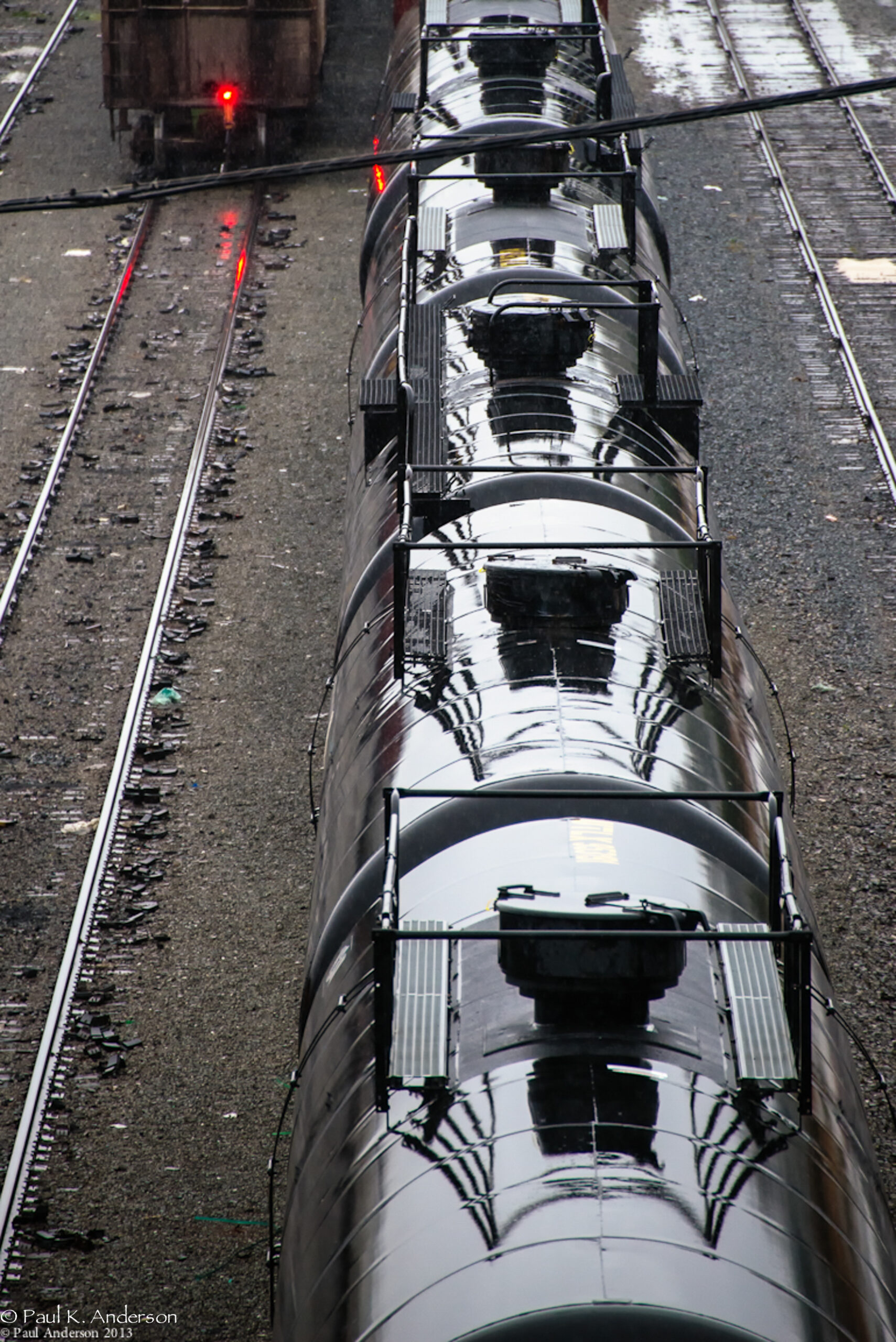
  • The feds propose to create a new improved tank car classification, DOT-117, for transporting Class 3 flammable liquids in unit trains.

Read more

Video: The Northwest’s “Bomb Trains”

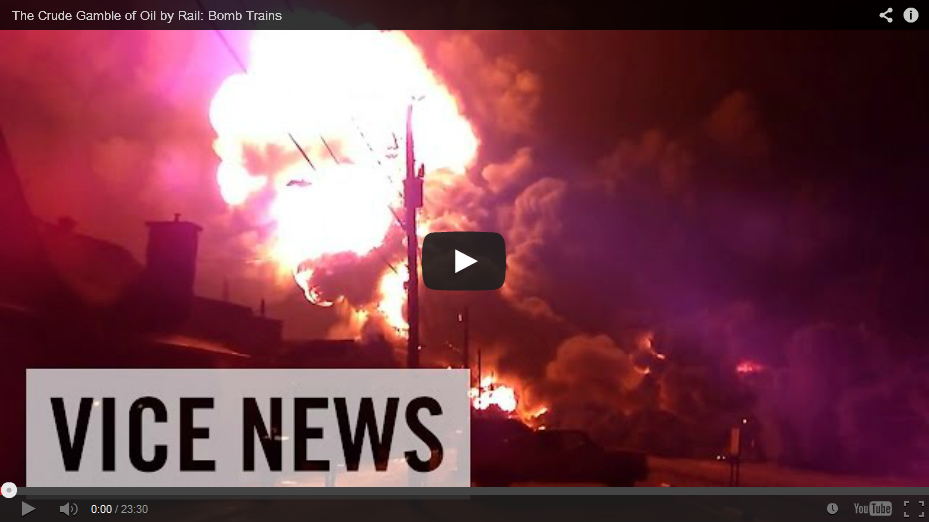
I’m excited to share this just-released VICE News video piece about the threats of oil trains in the Pacific Northwest: “The Crude Gamble of Oil by Rail: Bomb Trains.” Spencer Chumbley and Nilo Tabrizy put together a top-notch, comprehensive look at how this dangerous “pipeline on wheels” is already affecting our region, interviewing a broad … Read more

Pacific Rim Coal Prices Continue to Tumble

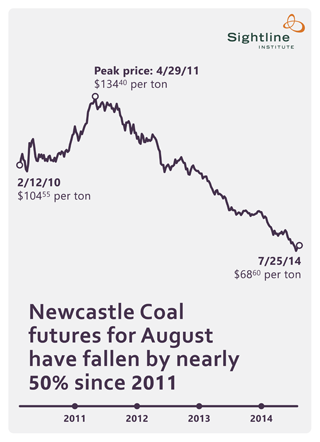
Newcastle coal futures prices, August 2014 contract.

In case you don’t check the coal futures markets every day, you may have missed the news that international coal prices recently reached a multi-year low. To understand just how dramatic the decline has been, all you need to do is look at the chart of futures prices for coal at Newcastle, Australia, one of the key pricing points for Pacific Rim coal markets.

If you’re a coal buyer in Korea or Japan you’re probably applauding the ongoing price collapse, because it means that you can buy a ton of coal for a lot less than you used to. But if you’re in the business of selling coal on the seaborne coal markets, the trends have been nothing short of a financial catastrophe.

When Pacific Rim coal prices shot up in 2009 through 2011, mining firms throughout the Pacific Rim invested tens of billions of dollars in new mines and export facilities, expecting a sure payoff. China’s demand looked like it was skyrocketing, and many market observers were convinced that prices would stay high indefinitely—leading many coal companies to lock themselves into long-term contracts with rail and port companies that required them to export coal, or else pay a stiff penalty.

Those long-term coal contracts turned out to be the financial equivalent of a poison pill. The flood of new coal throughout the Pacific Rim sent prices tumbling, even as China started to tap the brakes on its coal consumption, driven by high prices, a cooling economy, and terrible urban air quality.

Yet even though Pacific coal prices have fallen through the floor, those long term export contracts force many coal companies to keep selling coal at a loss. Sure, they’re losing money shipping coal overseas, but if they stopped exporting, they’d lose even more money from the contractual penalties with port and rail operators. This dynamic helps keep the coal flowing, driving prices lower and lower.

If you’re wondering whether these trends spell bad news for coal exports from the Pacific Northwest, the answer is simple: YES.

Read more

Coal Exports: Unfair Market Value

Today, Sightline is releasing a new report on the US Bureau of Land Management’s coal leasing programs: Unfair Market Value: By Ignoring Exports, BLM Underprices Federal Coal. As the report documents, coal companies operating in the western United States are buying coal from the American public with the explicit goal of shipping that coal overseas…yet the BLM is ignoring the potential profits from coal exports when setting its prices. As a result, the agency is giving away publicly owned coal for a song—boosting coal company profits, while denying the American public of millions of dollars of revenue each year. For details, read on…

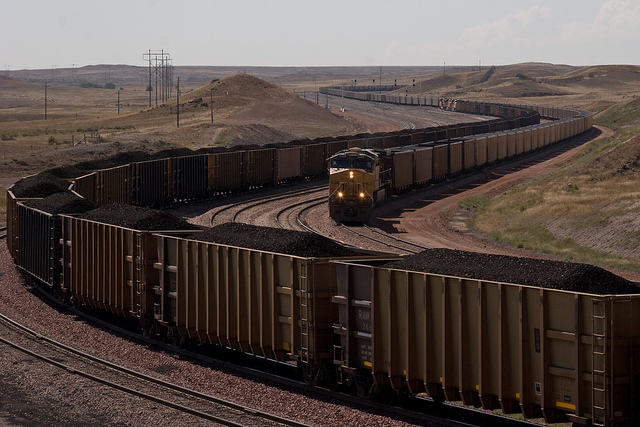
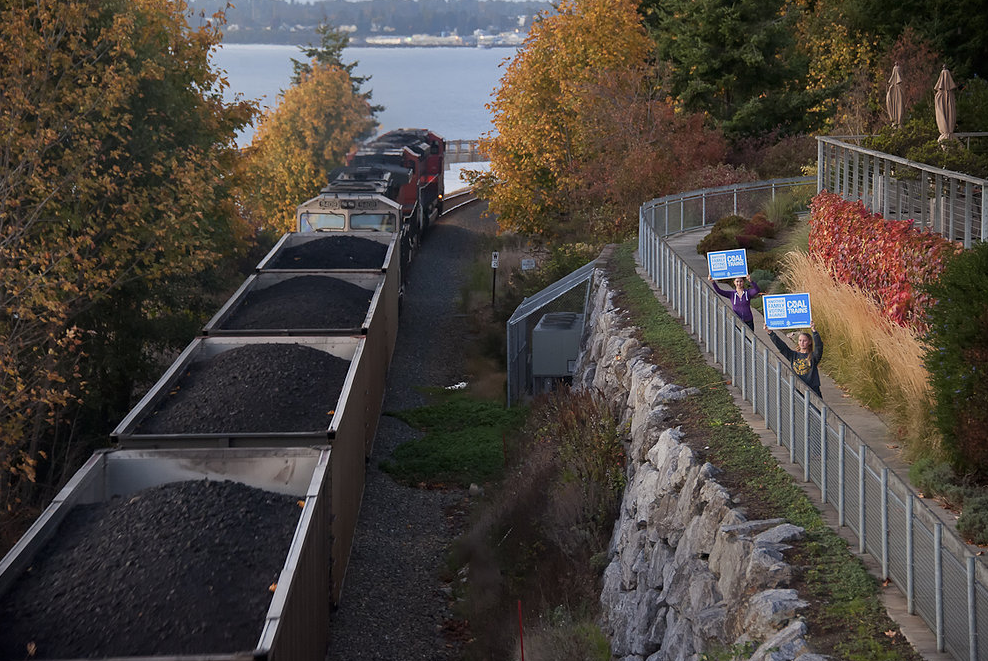
Perhaps you may have seen some of the mile-long coal trains that are now plying the rails in the Pacific Northwest, carrying coal to export terminals to be shipped to Asia. And perhaps you’ve even paused to wonder how those companies got hold of all of that exportable coal in the first place.

As it turns out, there’s a simple answer to that: if you’re a US citizen, they got that coal from you.

The American public, you see, owns vast deposits of coal throughout the western United States. Most of the coal in the Powder River Basin, for example, is owned in common by all Americans. The same is true for major coal deposits in Colorado, Utah, New Mexico, and other states. The coal companies don’t own it: you do.

If coal companies want to mine that coal, they’ve got to go through the US Bureau of Land Management’s (BLM) coal “leasing” program, which gives private companies access to public coal in exchange for leasing payments, royalty payments, and compliance with some basic environmental requirements.

But here’s the thing: the BLM gives away federal coal for a song—sometimes just pennies per ton. And what’s worse—as documented by Sightline’s latest report, Unfair Market ValueBLM almost completely ignores the potential profits from coal exports when deciding on the minimum price it will accept for federal coal.

Read more

Oil Train Derails in Seattle

Multiple news accounts reported just now that a loaded oil train derailed under the Magnolia Bridge, about a mile north of downtown Seattle. Joel Connelly’s account here. Many others here. The derailment apparently happened at slow speeds; no fuel spilled and no fire resulted. Here are some important resources on oil trains: Sightline has written … Read more

A Move to Ban the Most Dangerous Oil Trains

Yesterday, EarthJustice announced that it was filing a formal legal petition to compel the Secretary of the US Department of Transportation to issue an Emergency Order within thirty days to ban the use of unsafe legacy DOT-111 tank cars for transporting Bakken and other dangerous crude oils. In what appears to be a case of … Read more

×