Donate Newsletters

Industry To Feds: We Will Keep Using Old Unsafe Tank Cars For Three More Years, or Longer If We Feel Like It

This is the kind of oil industry-friendly approach to regulation that should make you want to bang your head on your desk. Bloomberg has the story:

The oil industry and the railroads that haul its crude have offered U.S. regulators a joint plan to phase out a type of older tank car tied to a spate of fiery accidents… The parties agreed to scrap a fleet of thousands of DOT-111s within three years if manufacturers agree they can replace or retrofit the tank cars in that period. [emphasis added]

What happened here is that the American Petroleum Institute and the Association of American Railroads met privately with federal regulators to offer this proposal in lieu of more stringent safety rules, such as those recommended by the National Transportation Safety Board.

Keep in mind that the DOT-111 tank cars in question are notoriously and obviously unsafe. Four times in the last year they have derailed and unleashed towering infernos, killing 47 people in one case. Yet the industry wants to keep them rolling on a daily basis through the heart of big cities, past major league baseball games, schools, cruise ship terminals, you name it. Even though these shipments expose taxpayers to enormous liability risks because the industry is radically under-insured against catastrophic accidents.

And even though these shipments are so dangerous that the slow federal regulatory response earned the ire of the top US transportation safety official who called it, “a tombstone mentality” and said, “we don’t need a higher body count before they move forward.”
Read more

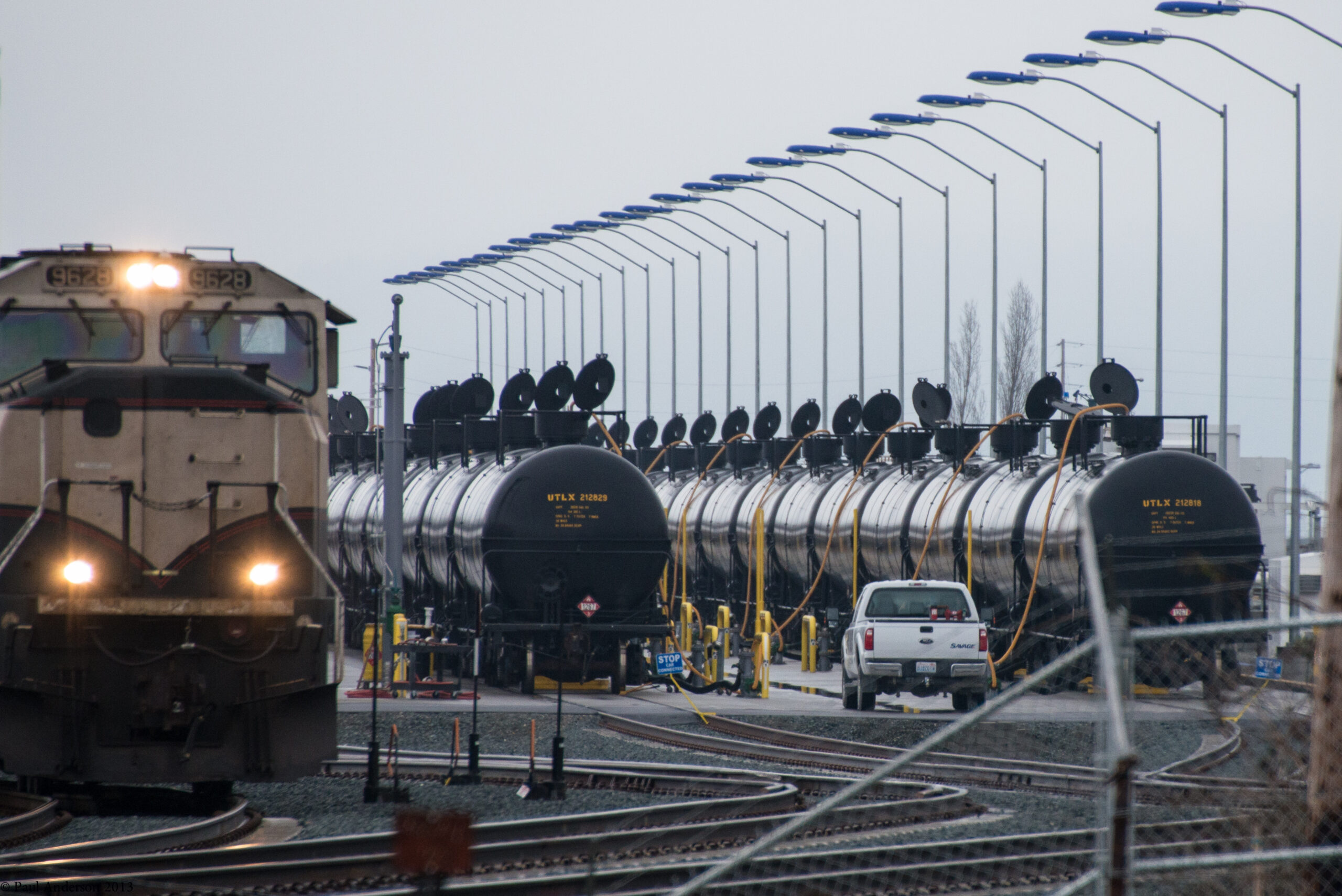
The Dirt on Tesoro

We’re releasing a new report profiling oil company Tesoro’s track record of flouting safety rules, injuring workers, obstructing safety investigations, toxic air pollution, and meddling in politics. As the Texas company angles to build a massive oil shipping facility along the Columbia River in Vancouver, Washington, local residents are increasingly anxious about Tesoro’s plans to … Read more

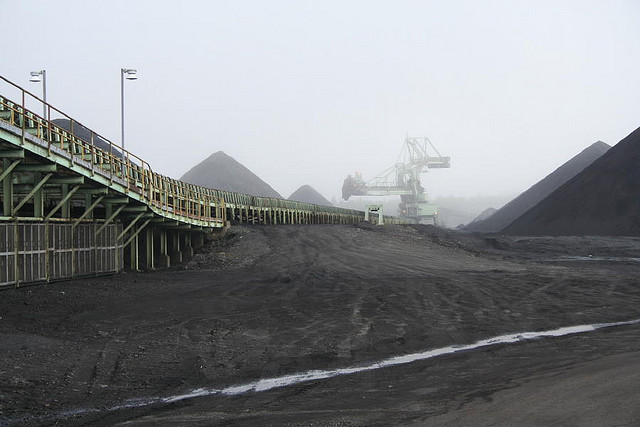
Bad News for Ridley Terminal

Not so long ago, the Ridley coal terminal in Prince Rupert, British Columbia, was riding high. The facility, which mostly exports coal from mines in BC and Alberta to customers in Asia, was seeing steady growth in shipping volumes. With international demand looking strong, coal companies had started to clamor for more port space—and the Canadian government, Ridley’s sole owner, announced plans both to expand the terminal and to sell it to a private owner, no doubt hoping for a hefty profit.

Now, just a few years later, Ridley’s fortunes have turned upside down. International coal prices have gone into freefall, customers have dried up, the terminal’s long-term finances have suffered from a string of shocks, and the proposed sale of Ridley has gone nowhere. Just how bad are things for Ridley? According to the latest statistics, just released today, June 2014 coal shipments at Ridley fell by 55% compared with last June. For the year to date, total coal shipments have fallen by nearly a third, compared with the first six months of 2013.

If anything, Ridley’s woes are just beginning. Here’s just a sampling of the recent news suggesting that Ridley’s facing serious long-term troubles:

Read more

What Have We Learned Since Lac-Mégantic?

A year ago today, in the small hours of the morning, a parked oil train slipped its brakes, rolled downhill, and derailed in a small town in Quebec. When the tank cars breached, they caught fire and erupted into a towering fireball that leveled several blocks of town and incinerated 47 people almost instantly.

That horrific disaster ushered in a new era of fear about crude oil-by-rail shipments.

Two weeks earlier Sightline had published the first regional inventory anywhere of oil-by-rail projects. We pointed out that Oregon and Washington are home to nearly a dozen active or proposed oil train depots that in aggregate would move about as much crude as the Keystone XL Pipeline—and far more than the region’s oil refining capacity. We released the report widely, and the response we got back sounded a lot like crickets chirping.

But after the explosion in Quebec, our phones started ringing off the hook.

As a result of growing interest in the subject, we devoted ourselves to researching and explaining the issue. Here are some of the most important things we’ve learned about oil-by-rail since Lac-Mégantic:

Read more

Event: Sightline on Oil Trains in Anacortes

As we near the anniversary of the Lac-Megantic oil train derailment and explosion that killed 47 people in Quebec last summer, communities across Washington State are wondering what the dramatic increase in regional oil train traffic means for them. Next week, some of our northern Washington neighbors will have an opportunity to find out. As … Read more

Recent Coal Export Trends: Q1 2014

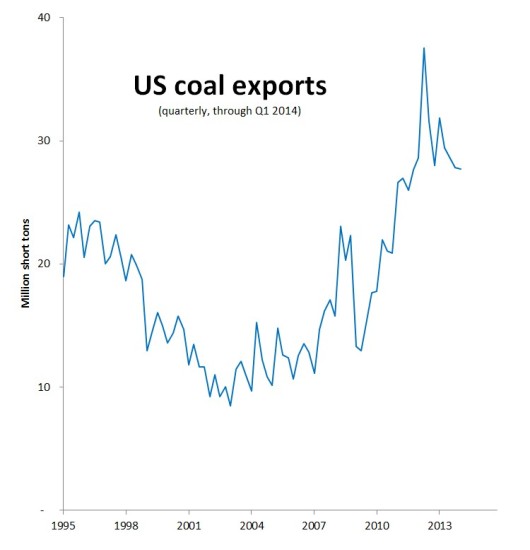
The US Department of Energy just released new figures in its quarterly coal export report. Here’s what happened up through the first quarter of 2014:

Original Sightline Institute graphic, available under our Free Use Policy.
Original Sightline Institute graphic, available under our Free Use Policy. US coal exports_Q1 2014 (Data from US Energy Information Administration’s Quarterly Coal Report.)

Nationally, coal exports were down slightly in the first quarter of 2014.

The US exported almost 27.7 million tons of coal in the first three months of the year, which is a lot by historical standards. Yet even so it represented a nearly 13 percent decline from the first quarter of 2013.

The Western Customs Region, center stage in the ferocious debate over expansion capacity, remains a minor player in the national coal exports scene, but coal shipments increased there a bit. The West Coast exported a bit less than 2.3 million tons, 3.3 percent more than the previous quarter.

Read more

South Korea’s All-New Tax on Imported Coal

South Korea’s new tax on coal imports, under discussion for over a year and announced this past January, went into effect today. Importers will now pay an additional 17 won per kg for coal under 5,000 kilocalories per kg, and 19 won per kg for coal over 5,000 kcal/kg. In more familiar terms, that’s a tax of $16 per metric ton for lower-calorie coal, and about $18 per metric ton for higher-calorie coal. By comparison, you can buy an entire metric ton of southern Powder River coal at the mine mouth for just over $14.

Korea designed the tax not only to raise revenue, but also to achieve two specific policy goals: discouraging coal consumption, and encouraging a shift to higher-energy coals.

And both of these policy objectives spell bad news for Northwest coal exports.

Read more

The Bursting of the Bakken Bubble?

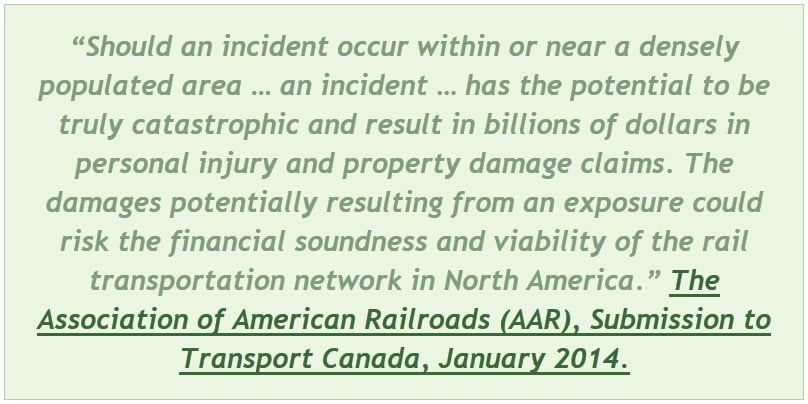
[prettyquote]“Should an incident occur within or near a densely populated area … an incident … has the potential to be truly catastrophic and result in billions of dollars in personal injury and property damage claims. The damages potentially resulting from an exposure could risk the financial soundness and viability of the rail transportation network in North America.” The Association of American Railroads (AAR), Submission to Transport Canada, January 2014. [/prettyquote]

Bakken crude oil production has many of the classic characteristics of an economic bubble. It looks likely that, as with every bubble before, it will end. Whether it ends catastrophically or just badly depends on how regulators act.

Some of the primary features of a bubble include a very rapid market expansion based on an unrealistic assessment of underlying risk, lax regulation, and an overly optimistic belief in continued rapid growth. In hindsight, it should have been obvious that hundreds of billions of dollars of poorly hedged sub-prime loans that depended on ever-rising housing prices were a huge risk. When the sub-prime mortgage bubble burst, the entire financial system was so distressed that a government bailout was required to save it. On a smaller scale, the same might be said for shipping huge amounts of explosive shale oil in unsafe, poorly insured tank cars through hundreds of populated areas: the risks are obvious but poorly hedged, and the enterprise can result in tremendous negative consequences for communities. In a realistic worst-case scenario, the Bakken oil train bubble bursting catastrophically could jeopardize the viability of the North American rail transportation network.

Read more

Cano Bobblehead Night or Epic Disaster in the Making?

It was still the ninth inning when fans began filtering out of the stadium. The Seattle Mariner’s were wrapping up a 3-2 win over Detroit on a warm, spring Saturday night. It was a perfect day at the ballpark.

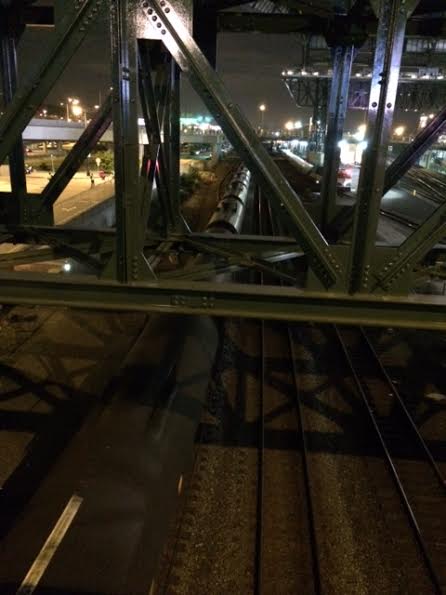
Yet there was chance—unlikely but entirely possible—that it could have been a an epic disaster. With perhaps 40,000 people heading out into the city, this train came barreling past within just a few yards of Safeco Field.

In case you’re wondering, that is almost certainly a loaded oil train. It’s a hundred or so tank cars each carrying roughly 30,000 gallons of a notoriously explosive type of shale oil. It’s exactly the same kind of train—loaded up exactly the same kind of fuel—that resulted in a deadly disaster in a small town in Quebec.

Sightline on Vancouver, WA Oil Train Proposal

If you’re following Sightline’s work on Northwest oil-by-rail projects, you may enjoy listening to this radio segment I did this week on KBOO, a community radio station based in Portland.

The piece is around 15 minutes long, and you can listen at this link. I’d like to give a big “thanks” to Old Mole Variety Hour host Laurie Mercier for a well-crafted interview session.

A few hours after my interview aired, the Vancouver City Council passed a strongly-worded resolution opposing the giant oil-by-rail transshipment scheme proposed on the waterfront by oil company Tesoro. Things are starting to get interesting on the Columbia.

×