


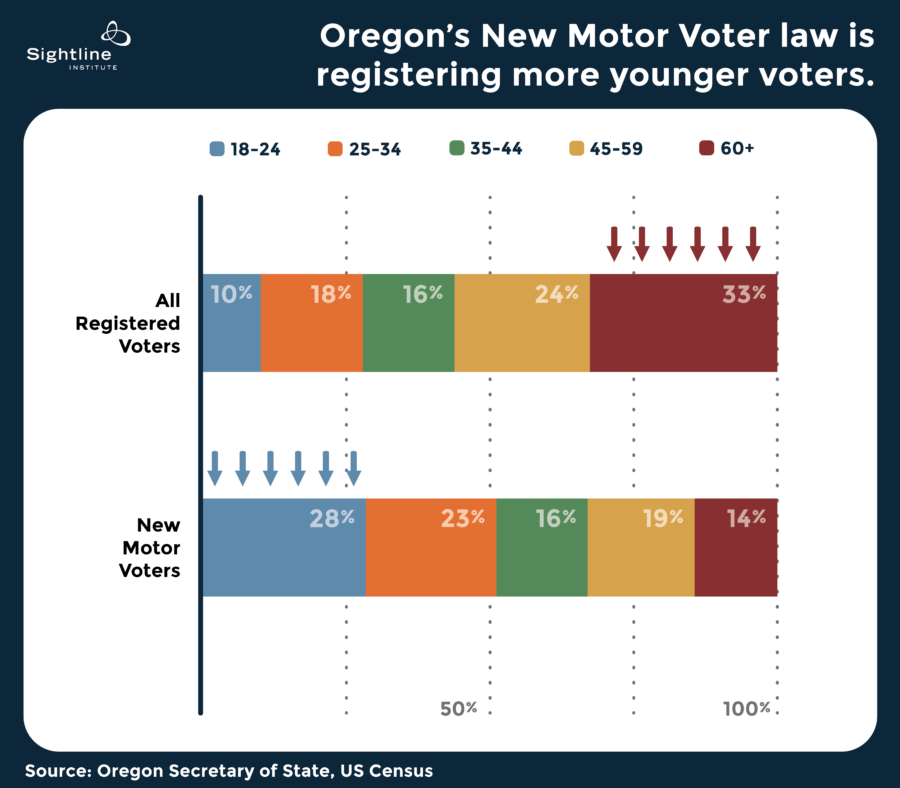
In 2016, New Motor Voter registered a quarter million new voters. Turns out, most of those newly registered voters are under 35.
Oregon’s New Motor Voter law is registering more young people to vote. Since registered voters skew older, Oregon’s automatic voter registration law is correcting the age bias and giving people of all ages access to the ballot.
In 2015, Oregon became the first state in the nation to automatically register citizens to vote when they prove their citizenship at the DMV. Oregon calls it New Motor Voter. You and I call it protecting our right to vote. And eliminating unnecessary paperwork in favor of a modern, secure, efficient registration system. In 2016, New Motor Voter registered a quarter million new voters. Turns out, most of those newly registered voters are under 35.
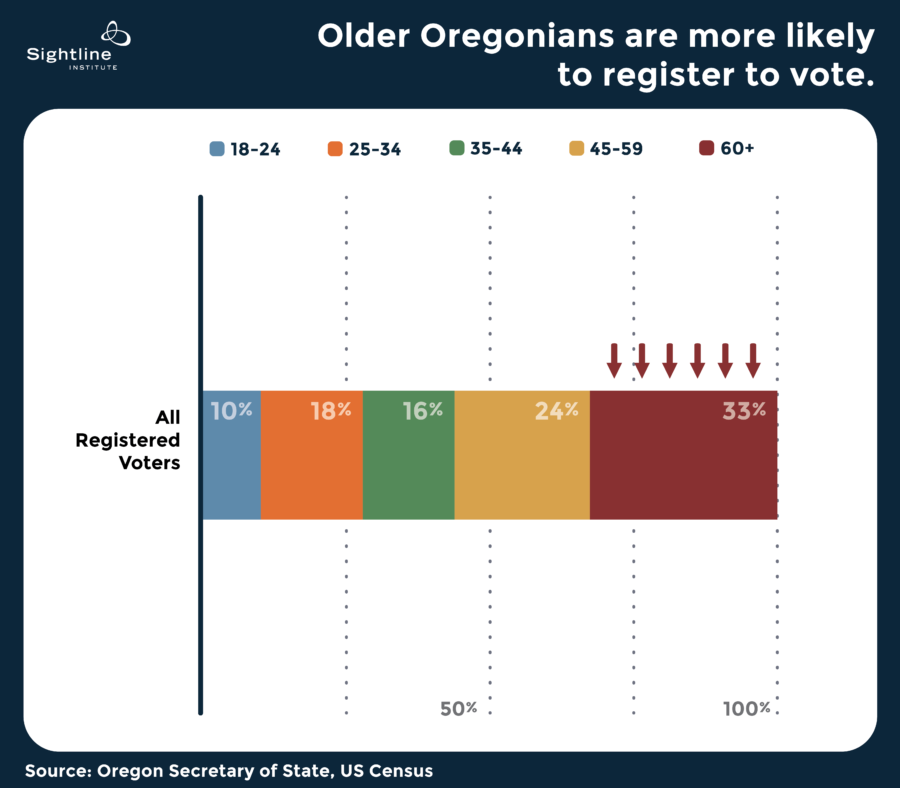
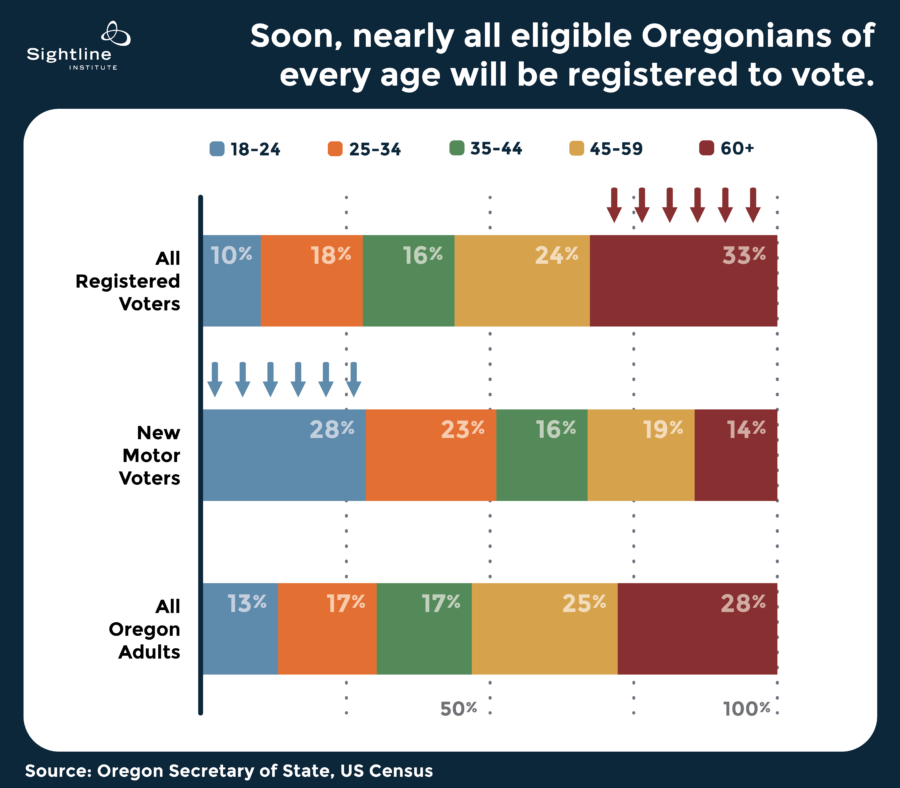
Until recently, all American states placed the burden of registering to vote on individuals. As a result, voter rolls skew disproportionately towards the 60+ crowd because older people are more likely to have registered themselves to vote. They’ve had more years to get around to the task of filling out the paperwork in their current location, while young people may have more recently moved to start school or start a new job. In Oregon, which uses vote-by-mail, those under 35 are less likely to get a ballot in the mail. Outdated paperwork limits eligible American’s right to vote, and it is costs the state more money to process excess paperwork.
But in the past two years, Oregon and ten other jurisdictions have modernized voter registration, making the process more efficient and more secure. Americans already provide proof of citizenship to state agencies such as the Department of Motor Vehicles (DMV), or the Alaska Permanent Fund Dividend (an agency that sends a check to all Alaskans reflecting their share of Alaska’s oil resources). Automatic voter registration automatically registers those citizens to vote, saving time and money and ensuring that every eligible American can have their voice heard.
In Oregon, the law has already slashed the number of eligible but unregistered voters to its lowest number in decades. By 2023, it will have registered all eligible voters who apply for an ID from the DMV, erasing the gap in rates of registration between younger and older voters. Washington could follow Oregon’s lead, using multiple agencies such as the Economic Services Administration and the Health Care Authority to modernize systems by automatically registering voters. Oregon is leading the way towards giving all eligible citizens equal opportunity to vote.
[list_signup_button button_text=”Like what you|apos;re reading? Get our latest democracy reform research right to your inbox.” form_title=”Reclaiming Our Democracy” selected_lists='{“Reclaiming Our Democracy”:”Reclaiming Our Democracy”}’ align=”center”]


SHiuld we amend AVR
To provide party affiliation information during the DMV interaction like 8 of the other 10 AVR states do?
It seems like in closed primary state with 90% safe legislative districts the primary is the critical election in the majority of election races.