

Apartments Are the Climate Solution Hiding in Plain Sight
US climate policy is blocked. Housing isn’t.
Alan Durning, Sightline Institute | May 2026
Download the report (pdf)Children play in a playground that’s part of the Village at Totem Lake, in Kirkland, Washington.
Photo by Webster Chang / Sightline Institute, rights reserved.
Introduction
Many US climate policies that were surging ahead two years ago under President Joe Biden, from EV sales incentives to onshoring of solar and battery manufacturing, are now blocked by the Trump administration and GOP Congress. One policy goal that’s alive and well, though, is homebuilding—and the bipartisan reforms that will spur more of it and bring down prices and rents for Americans. Because almost no one thinks of housing as a climate strategy, it is winning surprising support in blue and red states.
Erecting an abundance of apartment buildings, along with duplexes and other so-called middle housing, in cities and towns across America, is an impressively effective way to trim emissions of greenhouse gases. That’s largely because apartments are overwhelmingly more electrically powered than standalone houses, they use less land and building materials, and their residents require less transportation energy to go about their daily lives. Helpfully, too, there’s already a growing movement fighting for and winning the right to build more of these much-needed apartment homes: the pro-housing movement.
Climate leaders, dispirited by watching so many of their dreams dashed, could log gratifying victories for the climate in the immediate future by joining this swelling, bipartisan pro-homes progress. Indeed, they can reap large emissions reductions by shifting even slivers of their time and money toward pro-homes advocacy.
This report looks beyond Sightline Institute’s customary region of Cascadia to all the United States to point out a huge, free climate opportunity hiding in plain sight: apartments, along with other more compact, in-town housing options, reduce greenhouse gas emissions automatically.
Allowing more of these types of homes delivers climate progress, as detailed in the first part of this report. As documented in the second part, unlike other types of climate action, allowing housing is also politically feasible right now. Indeed, apartments may be the biggest domestic climate opportunity of the Trump years.

A passenger with their bicycle boards the light rail at the Angle Lake station south of Seattle, Washington. Housing options like apartments, especially when located near transit, help reduce personal vehicle reliance and resulting carbon emissions. Photo by Joe A. Kunzler.
Part I: How adding apartments and middle housing in cities and towns yields outsized climate benefits
Building apartments and middle housing (including accessory dwelling units, duplexes, triplexes, fourplexes, and cottage clusters) in compact, in-town communities trims climate impacts in four categories, listed below in descending order of importance.
Transportation
Apartments and middle housing trim transportation emissions, which come from the vehicles that a building’s residents rely on. Housing that lets people live closer to one another if they wish, especially when it is in urban and town centers, helps to foster a profusion of local amenities also close to each other. It creates walkable neighborhoods where proximity substitutes for mobility. People travel shorter distances to workplaces, schools, and shops; they shed extra cars, drive less, ride transit and bikes more, and walk and roll more.
Each extra apartment building in a compact neighborhood helps support more local businesses, too, enabling neighbors to also travel less—a virtuous circle. Emissions reductions extend to the services residents employ, from freight hauling to police patrols to meal deliveries, all of which are more efficient. They also extend upstream to emissions from fuel extraction and refining and vehicle manufacturing. This relationship is widely documented and understood in the planning profession.
Building energy use
Apartments and middle housing trim building energy emissions from the combustion of fossil fuels on site, mostly from gas heating of space and water, and secondarily from appliances such as ranges and dryers. These housing types also reduce emissions from the fossil-fuel combustion that generates buildings’ electricity. Electrification is a key solution to on-site emissions: producing zero-carbon electricity is much easier than producing zero-carbon heating and cooling at each dwelling.
Another key is optimizing energy efficiency, through insulation, air sealing, energy-recovery ventilation, heat pumps, and power-sipping appliances. These tools allow fewer power plants and a smaller power grid to serve buildings. As detailed below in an in-depth case study, apartments—even more than middle housing—are much more likely to be all-electric than houses. They are also smaller per resident and are more energy-efficient, because they share their walls and therefore heat. New apartments are an almost automatic form of building decarbonization, a relationship that is not widely understood and is therefore a focus of this report.
Embodied carbon in building materials
Apartments and middle housing trim emissions that result from the extraction and manufacturing of a building’s material components. Concrete is the worst offender, followed by certain insulation and waterproofing materials. Emissions from timber harvesting can also contribute. Tall apartment towers made of concrete, particularly those with large parking garages, have large embodied emissions footprints, but midsize apartment buildings and tall buildings with little indoor parking cause fewer embodied emissions per resident or per bedroom than wood-frame houses.
Land development
Apartments and middle housing use far less land per home than houses. This means they disturb less land—and the carbon sequestered in that land’s soils, plants, and animals—even as they house more people. Apartment buildings’ efficient use of land brings large emissions savings compared with houses. Each in-town apartment building shelters residents who might otherwise live in sprawling houses on faraway greenfield sites, supplanting ecosystems that would store carbon.

Compounding climate benefits
These four categories of climate benefits—transportation, building energy, embodied carbon, and land development—yield compounding emissions reductions. Counting all four types of benefits, residents of townhouses and low-rise apartments typically cause half as much per-capita climate pollution as do detached householders in low-density areas. Residents of high-rises do even better: they typically cause one-third the emissions of detached householders per person.
In other words, on average, a resident of a detached house in a typical suburban or exurban American neighborhood causes three times as much climate harm as a resident of a tall apartment building in town and twice as much as a resident of a middle-housing neighborhood.
Such static comparisons are dramatic, but are they replicable through new home construction, or do they just reflect which people choose to live where? On the housing density spectrum, most people don’t move from one extreme to the other but instead shift up or down a notch or two. Can filling existing neighborhoods with more apartments, rowhouses, and backyard cottages yield sizable emissions reductions? Yes. Recent studies suggest infill housing reforms bring metro-area reductions that range up to 11 percent or 14 percent. To achieve the high end of those ranges, the new homes must cluster in prime locations, close to transit and to rich mixes of other amenities.
Basically, for climate, the more urban, the better. In many cities, such reforms could be the single most impactful emissions strategy that’s fully under local control.
Example: Seattle, Washington
A case in point is the greater Seattle area, which has sprawled outward marginally less than peer metro areas in the United States. From 2000 to 2020, it moved about one-third of its increment of population increase into new homes in existing neighborhoods rather than onto greenfield sites. Peer metros sprawled more.
Yet thanks mostly to pro-housing reforms adopted in the 1990s, the Seattle area still trimmed greenhouse gas emissions below what they would have been if the metro had sprawled like Dallas, for example. Conservatively estimated, Seattle’s savings over this century’s first two decades were five percent.
The pace of Seattle’s savings has almost certainly accelerated since 2020. Because buildings’ design and permitting often comes years before they are completed and occupied, none of the sweeping pro-homes reforms that Seattle, surrounding communities, and the state of Washington have adopted since the late 2010s were reflected in the 2000–20 estimate: legalizing accessory dwelling units and middle housing almost everywhere, allowing apartments near transit stations and in commercial zones, re-legalizing co-living, deregulating off-street parking, and dozens of other positive zoning and building-code changes. The climate benefits of these pro-homes reforms will accrue in the years ahead.

The climate potential of infill housing reforms may be substantial, but can they work quickly enough to matter? Yes. Last year, RMI showed that over a decade, state-level reforms that boost infill housing could trim carbon emissions by the same amount as if half of US states adopted California’s sweeping ban on internal-combustion vehicles, currently the most ambitious transportation electrification policy in the United States (but also under federal assault).
A more recent version of RMI’s study implies that locating most of the next ten percent increase in the nation’s homes within existing neighborhoods would reduce US emissions from all sources by one to two percent within a decade. Given the hundred-year lifespan of buildings, that’s a big, quick result.
A closer look at the building energy category illustrates the potential climate benefits.
Case study: Building decarbonization by allowing more apartments
Measured by philanthropic dollars spent, building decarbonization—weaning buildings from on-site gas combustion to electricity—ranks third among US climate strategies, after zero-carbon transportation and cleaning the electric grid. This prioritization makes sense considering that US residences release about one-tenth of the nation’s greenhouse gases.i
Most new apartment buildings, unlike most new houses, already heat their air and water with electricity, and that’s almost as true in parts of the United States without climate-friendly building codes as it is in parts with those codes. Indeed, apartments are so much more electrified than houses that every American who chooses an apartment over a house is about 60 percent more likely to inhabit an all-electric residence.
What’s more, as discussed below, many more Americans would choose apartments were they more available. And: many more apartments would be available—and their rents more affordable—if zoning codes did not exclude them from all but a tiny sliver of US residential land.
Every American who chooses an apartment over a house is about 60 percent more likely to inhabit an all-electric residence.
Apartments: Increasing, electric, and increasingly electric
More than a quarter of US residences are apartments, and their share is growing; the remainder are houses.ii The former are found mostly in city, suburb, and town centers, and they occupy a tiny slice of American residential land—probably less than five percent, as detailed below.
US apartment construction reached 600,000 new apartments in 2024, a level not seen since the 1980s (see Figure 1). During the past half-century, electric heating has predominated in new apartments, according to the Census Bureau’s annual Survey of Construction. Heating dominates energy use in US residences, at 42 percent of the total; add air conditioning, and the total rises to 52 percent for controlling indoor temperatures. Electric heating is the main event in building decarbonization, because some 68 percent of residential natural gas consumption goes to space heating.
Figure 1

Apartments are expanding as a share of dwellings. Over the past half century, about 27 percent of new US residences have been apartments. In 2024, the figure reached 37 percent, the largest share in four decades, as shown in Figure 2.
Figure 2

Apartments are not only inching upward as a share of all new homes; the share of them that is electrically heated is growing as well. Electric heating grew to 76 percent of new apartments in 2024, the highest share on record, as shown in Figure 3. The electric share has rarely dipped below half of all new apartments. Overall, 68 percent of new apartments constructed since 1973 are heated with electricity.
Figure 3

Apartment developers install electric rather than gas heat because apartments’ shared walls and smaller square footage per resident make them easier to keep warm than houses, which makes electricity’s higher cost per unit of energy immaterial. They also find electric heat, compared with gas, easier to install and meter for each unit.
Houses contrast considerably. Electric heating served only 38 percent of houses built in the last half-century, though in 2024, it rose to a record 52 percent of new houses. So overall, every family that chooses an apartment instead of a house increases the chances of living in an electrically heated home from 38 percent to 68 percent, a 60 percent increase.iii For the climate, therefore, making apartments abundantly available is a big step forward.
Regions vary, but apartments are more electric everywhere
Heating energy varies by region, as shown in Figure 4. The South uses electricity for heating in most new homes, and its new apartments are 96 percent electrically heated. The colder-climate Northeast and Midwest, in contrast, heat their new houses overwhelmingly with gas. Just 14 and 19 percent of them, respectively, are heated with electricity, though 43 percent of new Northeast apartments and 61 percent of new Midwest apartments are electrically heated. In the West, meanwhile, a third of new houses and almost two-thirds of new apartments feature electric heating.
Figure 4

Spotlight: The Pacific Northwest
Sightline Institute’s subset of the West, the Northwest region, is more like the South than the rest of the West. Idaho, Montana, Oregon, and Washington benefit from inexpensive electricity courtesy of federal dams in the Columbia River Basin. According to a 2022 survey conducted by the Northwest Energy Efficiency Alliance, at least 84 percent and possibly as much as 91 percent of existing apartment homes, plus virtually all new apartments in the region, feature electric heat.iv
The Northwest’s houses, meanwhile, lag.v Overall, only 44 percent of the region’s houses are heated with electricity, roughly half as large a share as its apartments. The electric share has grown recently, and among new houses it’s now above 50 percent. Still, every northwesterner who chooses an apartment over a house is twice as likely to heat their home without fossil fuels.
The pattern in the Northwest, like in other regions, is consistent in one way, though: apartments everywhere outpace houses in decarbonization. Overall, among existing US dwellings, apartments are 60 percent more likely to be heated with electricity, and among new US dwellings, apartments are almost 50 percent more likely. Where electric heating is least common, furthermore, apartments’ advantage is largest: in the US Northeast, a new apartment is three times as likely to be heated with electricity as is a new house.

Water heaters: Same story
If space heating is the dominant source of carbon emissions in residential buildings, accounting for 68 percent of in-home natural gas consumption, most of the remaining home climate pollution comes from water heaters. They account for 25 percent of residential natural gas. Overall, space and water heating account for 94 percent of residential gas consumption.
In water heating, too, apartments are already far more electrified than houses, according to the Survey of Construction.vi Some 58 percent of existing US apartments get their hot water courtesy of electricity, compared with 43 percent of existing houses. What’s more, the electric share has been trending upward. In general, the newer the apartment, the more likely its water is to be heated with electricity (see Figure 5). In fact, water heating may be even more electric than space heating. Some 71 percent of US apartments built between 2016 and 2020 depend on electric water heaters—a higher figure than for electric space heating in those years, which was 65 percent.
Figure 5

Patterns vary by region for water heating, as for space heating. In the Northwest states, for example, some 84 percent of all apartments heat their water with electricity, while only 52 percent of houses do, according to the Northwest Energy Efficiency Alliance survey.
What does not vary by region is the relationship between dwellings’ space and water heating. Buildings with electric space heating almost always use electric water heating, and vice versa. Another constant among regions, for water as for space heating, is that new apartment buildings are a big step toward decarbonization, compared with houses.
In summary, most apartments, especially new ones, are already all-electric and decarbonized. Their residents, especially if they are in town, drive dramatically less, as do residents of in-town middle housing. Construction of middle housing and of most apartments emits far fewer greenhouse gases from the manufacture of building materials and from the clearing of carbon-storing rural lands. All told, as noted, residents of tall, urban buildings emit one-third the greenhouse gases per capita of their suburban house-dwelling counterparts, on average.
That’s the technical argument for building many more of the homes Americans need in multifamily structures close to jobs, shops, schools, parks, and transit: it can slash emissions. Climate-wise, apartments are to houses as EVs are to SUVs.
The political argument is simpler: housing wins are currently possible. Most other climate wins are not.

Washington state electeds, including House sponsor Jessica Bateman (middle) and Senate sponsor Yasmin Trudeau (right), Democrats, and co-sponsor Andrew Barkis (left), a Republican, look on as the Washington State Senate approves HB 1110, a landmark middle housing bill, in April 2023. Photo by Washington Legislative Support Services.
Part II: Climate politics are stuck; Housing politics are accelerating
The central political fact about climate in the United States is that partisan polarization blocks action. In US politics, almost anything that counts as climate action faces withering fire from the Trump administration and the MAGA majority of the GOP.
At the federal level, much climate action will therefore be in retreat until 2029, at the earliest. Just so, at the state level, climate action will suffer if it requires federal approval or funding. It is off-limits for state governments in the 23 states run by Republican trifectas, and it’s tightly constrained in the 12 states with divided governments. Even in the 15 Democrat-run blue trifecta states, climate action is hamstrung by federal opposition, tight budgets, and, in some places, litigation.
Case in point: the climate movement’s principal strategies for building decarbonization have been to lobby for state and local building codes that phase out gas in favor of electricity and to call for federal and state subsidies for heat pumps and other tools of electrification. Political headwinds have buffeted these strategies, closing off opportunities at the federal level and in all states other than the blue trifectas. Even in the blue states, political challenges and litigation are prevalent.
The central political fact about housing in the United States, on the other hand, is that it—and housing affordability specifically—is a top-tier priority across the partisan spectrum. This opens an alternate path to building decarbonization and other climate progress: namely, by allowing apartments and middle housing in many more places.
Homebuilding is a priority for non-climate reasons
America needs more homes, of all shapes and sizes, in most of its cities and towns. With a housing shortage estimated at 5 million missing residences, the resulting high housing costs and rents that come from cut-throat competition for homes are among the main drags on family budgets, productivity growth, quality of life, and economic mobility. Expensive housing leads polls for political concerns in many cities, and it’s entangled with homelessness and public disorder, other poll-topping concerns that it worsens.
Indeed, housing shortages contribute to so many contemporary ills that observers have begun to speak of a “housing theory of everything.” Housing is central to the more general American “affordability crisis,” and housing shortages are the poster child of most calls for an “abundance agenda.”
Pro-housing reforms can allow millions of additional people to live in affordable, walkable, high-opportunity neighborhoods. These reforms can house Americans and their children. They can lower rents and chip away at homelessness. They can reignite economic and social mobility, productivity growth, and rising incomes. Few policy reforms bring bigger payoffs or draw support from more constituencies. For climate hawks, that’s a blessing: emissions reductions are invisible side effects.

Housing reform is a bipartisan strategy
Across North America, the pro-housing movement has been winning with bipartisan support—everyone from property-rights Republicans to social-justice Democrats. It’s far from universally favored, but its opponents, like its proponents, span the left-right spectrum. This fact makes housing reforms winnable at times when other priorities are not. Pro-housing reforms can attract unusual coalitions, with diverse constituencies and motives. Fortunately, no one need mention climate change. Indeed, many Montana legislators who call climate change a hoax nonetheless voted for Montana’s two rounds of sweeping, Republican-led housing reforms in 2023 and 2025.
One of the cross-partisan appeals of pro-housing reforms is that all they require of governments is to get out of the way. If legislators simply use the delete key on select lines of the building and zoning codes, the market will erect cottages, duplexes, rowhouses, three-story walkups, courtyard apartments, midrise apartment blocks, and high-rise towers. As the writer Payton Chung put it on Twitter: “Millions of Americans want to spend billions of THEIR OWN dollars to cut their carbon emissions in half, if only local zoning would let them.”
Many Montana legislators who call climate change a hoax nonetheless voted for Montana’s two rounds of sweeping, Republican-led housing reforms in 2023 and 2025.
Plus, pro-housing reforms are entirely in the hands of state and local governments. They require neither federal funds nor federal sign-off. They rarely even require state funds. These facts make the pro-housing movement a singularly high-leverage climate investment right now.
The pro-housing movement is on a winning streak
The pro-housing movement, though nascent and small, is growing rapidly and has a gratifying record of success. In recent years, it has trimmed the thicket of onerous regulations that slow infill homebuilding. In the past ten years, Arizona, Arkansas, California, Colorado, Iowa, Massachusetts, Montana, Oregon, and Washington have all ended exclusive single-family zoning with a series of laws re-legalizing backyard cottages, duplexes, triplexes, or fourplexes on most or all lots. Individual cities, including Anchorage, Boise, and Charlotte, have followed suit. As noted below, these and other states have begun legalizing apartment buildings in more places, too.
These victories stem from the growing sophistication of the housing movement. It has learned how to assemble winning political coalitions for reforms. It has learned how to overcome many of the political challenges that once stymied it. It knows how to devise the most effective strategies, build strong coalitions, design sound policies, make persuasive arguments, and deploy messages and messengers. It has succeeded in a suite of red and blue states and is building momentum in others.
Still, the movement’s work is far from complete. It took a century to erect the tangle of regulations that block the emergence of compact communities in the United States. It will take more than the decade since the pro-housing movement’s inception to eradicate these barriers.
The gridlocked politics of status quo building decarbonization
Consider again the case study of building decarbonization. The policy arguments for building codes that nudge architects away from gas for new buildings are compelling. Gas extraction and combustion afflict everyone with incremental climate harm. Gas appliances leak into residences, pollute indoor air (including with the carcinogen benzene), and cause fires and occasional explosions. Living with a gas stove, recent research shows, is on the same scale for damaging children’s lungs as living with a smoker.
Gas’s litany of risks, long worrisome, is in some ways more objectionable than it used to be, because its electric competition has improved. The electric grid is getting cleaner fast; wholesale costs for wind, solar, and batteries are plummeting; and improved electric appliances such as heat pumps, heat-pump water heaters, and induction cooktops are proving better than their gas counterparts.
For all these reasons, building codes that push the housing stock toward safer, cleaner, healthier electricity make sense. Because they dictate standards only for new buildings, they are targeted and cost-effective; new construction is the most economical time to electrify. It’s when any additional upfront costs of decarbonization are smallest and easiest to pay off from savings on operating costs.
Such arguments are persuasive to many, and they can sometimes carry the day in blue trifecta states. Climate leaders can do well by continuing to pursue them in those places.
Sadly, in red states and at the federal level nowadays, they fall on deaf ears. In the best case, climate science-skeptic leaders object to electrification policies on the grounds that builders and homebuyers know better than public officials how to weigh energy tradeoffs. In the worst case, climate skeptics object reflexively, according to the logic of negative partisanship; the harder climate hawks push for electrification, the harder skeptics push for fossil fuels.
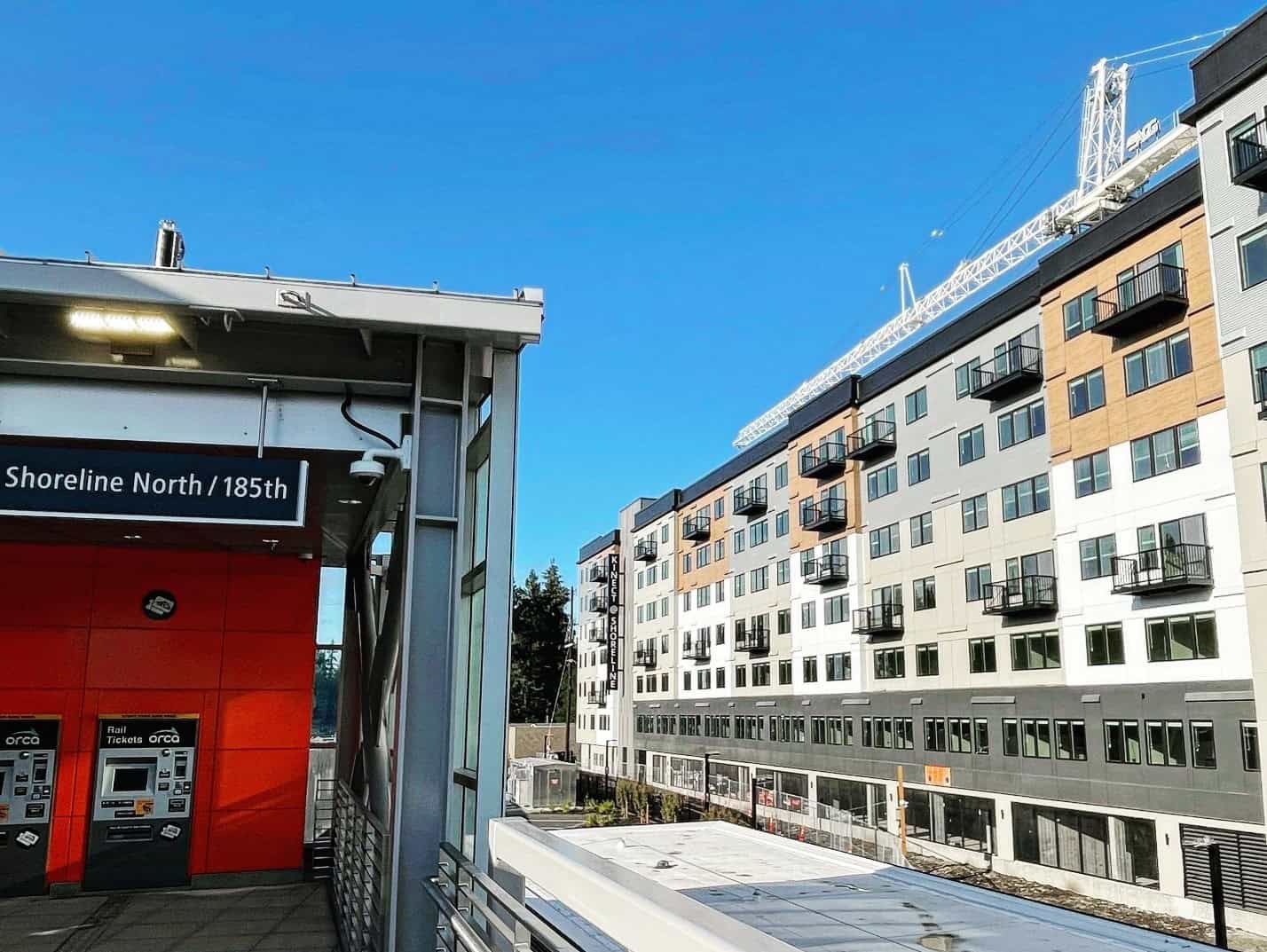
The politics and successes of the pro-homes movement
In the American South, for example, aside from the District of Columbia and some border states such as Maryland, states are now governed by climate science skeptics. They reject avowedly pro-climate action, including building code proposals that would phase out gas furnaces. In these states, however, almost all apartment buildings erected will be all-electric anyway, rendering building code reforms superfluous.
Climate action, at least in red states and federal policy, can focus on joining the deregulatory crusade of the pro-housing movement to get more apartments built. The pro-housing movement’s next front is to allow not just middle housing but also apartment buildings, which are currently banned on almost all residential land in metropolitan areas.
A rough national analysis found that only single-detached houses are legal on more than 75 percent of residential land in most US cities and suburbs. Sightline conducted a fine-grained analysis of zoning in Oregon and found a more extreme pattern. Apartment buildings of at least four stories are currently allowed on less than 1 percent of the residential land in all but ten Oregon cities; even in the urbanist stronghold of Portland, a pioneer of the pro-housing movement, such apartment buildings are banned on all but 14 percent of residential land.vii
Pro-housing advocates have already won major statewide reforms to allow more apartments close to transit stations in California, Colorado, Massachusetts, Washington, and the Canadian province of British Columbia. They won reforms welcoming apartments in commercial zones across Montana, Texas, and Washington. And in a recent win in Oregon, they pioneered a promising new strategy for apartment legalization in large sections of every city statewide. Almost every one of these wins came with bipartisan support, some with Republicans in the vanguard, and others with Democrats leading. The movement is even finding bipartisan support in the most polarized legislature in the United States: the 119th Congress.
This unexpected progress comes partly thanks to the fact that politicians and voters do not think of apartments as climate solutions. Pro-housing leaders’ motives are varied: property rights and deregulation on the right, undoing redlining and exclusionary zoning on the left, unleashing the market to solve a massive housing shortage in the center, and for everyone, providing enough homes, in all shapes and sizes, for American families.
The rub: Building decarbonization rules vs. homebuilding urgency
In blue trifecta states, tensions sometimes emerge between climate hawks and pro-housing advocates. Building decarbonization advocates, who promote all-electric provisions in building codes, can disagree with pro-housing advocates, who have succeeded by building multipartisan coalitions to liberalize zoning and building codes.
These pro-housing coalitions often come together by agreeing to selectively prune, and never augment, building and zoning codes. So, asking housing advocates to make an exception for gas-shedding rules, whatever the merits of those rules, can break those coalitions. Notably, other coalition partners—homelessness service providers, affordable housing nonprofits, advocates for seniors or the disabled, trade unions, realtors, builders, and more—have already set aside their own favored exceptions.
Such tensions are usually manageable but require careful attention. In Oregon and Washington, for example, pro-housing champions have mostly stayed quiet as the climate movement campaigned for gas-weaning rules in building codes. In Washington, climate hawks have succeeded; in Oregon, not yet. In both states, meanwhile, climate leaders have endorsed overarching pro-housing reforms without taking leading roles.
When it comes to apartment legalization, however, climate and pro-housing voices find aligned interests. Even in blue trifecta states, therefore, climate leaders would do well to support apartments. In-town apartment legalization is climate action, and through it, climate leaders can help to magic-wand into existence all-electric buildings by the thousands.

The Bellevue Downtown Park, in Bellevue, Washington, with apartment and office buildings nearby. Photoby Olya Helms.
Conclusion: Housing reform deserves climate priority
To date, the pro-housing movement’s impressive record of success has come surprisingly cheap. Pro-housing nonprofits have been logging major policy victories at costs that are typically in the low hundreds of thousands of dollars per win. At present, only three major national philanthropies support zoning reform; in contrast, scores support other forms of climate action. Altogether, the pro-housing movement spent at most $40 million in the United States in 2023, according to Sightline’s research.viii The same year, the nonprofit climate movement spent an estimated $4 billion from philanthropic sources, according to data from an Indiana University study.
In other words, the climate movement spends 100 times more than the pro-housing movement, but right now, the housing movement is the one with room to run. Even shifting one percent of US climate funding to housing would more than double the latter’s support. Climate leaders, whether of nonprofits or of climate philanthropies, may be able to reduce emissions by shifting some of their resources into the pro-housing movement.
Apartment legalization is building decarbonization. Everywhere in the United States, new apartment buildings are either already all-electric or are dramatically more electrified than houses. Adding more apartments almost always yields progress toward lower-carbon homes. It also trims driving, embodied carbon, and carbon-sink soils disturbed for development. Middle housing development in cities brings giant climate benefits, too. Remember: residents of middle-housing buildings in town usually emit half as much climate pollution per capita as suburban householders, while residents of in-town apartment towers release one-third as much.
The climate movement, including its building decarbonization wing, has been clotheslined by right-wing populism since the November 2024 election, but the pro-housing movement has not. Indeed, it continues to gain momentum. With an infusion of even a sliver of the climate movement’s people, grassroots reach, political connections, and funding, it could rack up wins that will make an appreciable dent in American emissions, even during a climate backlash.
Even shifting one percent of US climate funding to housing would more than double the latter’s support.
Together, the climate and pro-housing movements can unleash the construction of millions of privately funded, affordable, age-accessible homes in all-electric buildings, in walkable, low-carbon neighborhoods, in both blue and red states. What a legacy that would be for these otherwise dark climate years.
Thanks to Sightline’s Jay Lee for quantitative analysis and to peer reviewers Heather Clark, KC Golden, Ben Holland, and Ben Spearing for their comments. Errors are my own.
Appendices
1. What about electrified homes powered by fossil-fuel plants?
In much of the United States, much of the electric grid is still powered by gas or coal plants. Earlier generations of climate hawks have therefore been wary of electric heating. Burning gas in a basement furnace, for example, typically causes fewer greenhouse gas emissions than does electric resistance heating powered by a gas plant.
But that’s a static analysis. Building decarbonization is a wing of a larger movement that is trying to (1) clean the grid and (2) electrify everything. The race is on to do both, and the clean-grid wing is currently in the lead. That’s why building decarbonizers do not fret about electrification going too fast. They know that the costs of solar, wind, and batteries are falling toward and even below the operating costs of existing fossil-fuel plants, and solar and wind are already providing almost all new US and global power-generating capacity. Existing gas plants may begin to die before new gas home furnaces wear out. They also worry about buildings getting locked into burning gas: once gas lines and appliances are installed, electrification can be prohibitively expensive.
2. Heat pumps and resistance heaters
Most apartment buildings use electric resistance heaters, such as cove heaters or baseboard radiators, but heat pumps are gradually taking over the market. Fewer than 3 percent of Northwest buildings completed in the two decades after 1950 used heat pumps when surveyed in 2022. (Many of them were probably converted to heat pumps since their original construction, insofar as heat pumps were exceedingly rare in the 1950s and 1960s.) The figure is seven times higher among post-2010 apartment buildings, at more than 18 percent, as shown in Figure 6. Including both houses and apartments in the United States, heat pump sales overtook sales of gas furnaces in 2020 and now lead by a third.
Figure 6

Figure 7, meanwhile, shows that more than 41 percent of post-2010 houses were on team heat pump in 2022. Among pre-1951 houses, only 16 percent were.
Figure 7

Conventional (air-source) heat pumps are typically three times as efficient as resistance heaters at moderate temperatures, which makes them ideal for temperate climates. But as the mercury drops, their advantage shrinks. Below freezing, many operate backup electric resistance heaters. In cold climates, a more expensive specialty type of air-source heat pump helps, and ground-source heat pumps—ideally networked—are an enticing option.
Everywhere, heat pumps also provide cooling, a growing necessity as the climate warms. In the long run, building decarbonization means not only replacing gas with electricity but also replacing resistance heaters with air- or ground-source heat pumps. In the short run, though, anything that gets homes off gas is a step toward zero carbon.
About the Author

Alan Durning, executive director, founded Northwest Environment Watch in 1993, which became Sightline Institute in 2006. Alan’s current topics of focus include housing affordability and democracy reform.