Donate Newsletters

The Holy Grail of Parenting

On a recent vacation, I had a perfect moment, one that so rarely occurs since I had a kid nearly six years ago. I was sitting on a deck, drinking a gin and tonic, and having civilized conversations with my husband’s oldest friends. Almost entirely uninterrupted.

That’s because sandwiched between our restaurant and another across the way was a grassy field full of roving kid gangs. They were far enough away that their entropic energy didn’t bother anyone, but close enough that you could still keep half an eye on them.

Our daughter befriended a local girl, cadged a piece of her birthday cake, and joined and lost interest in countless soccer scrimmages, dance parties, frisbee games, and sibling chases.The important point is that she was having a great time doing kid things, and we were having great time doing adult things. In the same place.

In my life, this doesn’t happen nearly as often as I’d like. Possibly because of byzantine liquor laws, the fact that urban land is pretty expensive to let kids run wild on it, and all the perfectly good reasons that not everyone wants our child around as much as we do.

Happening upon those urban spaces that serve children and adults equally well is like the Holy Grail of parenting.

Read more

Carbon Pricing and Northwest Businesses

Many business owners and workers worry that carbon pricing will hurt local economies. They need to know: How would carbon pricing affect businesses and job creation in Washington and Oregon? In particular, how would it affect energy-intensive businesses that compete in national and international markets with companies not yet covered by carbon pricing? Will these energy-intensive, trade-exposed (EITE) businesses, like steel and aluminum manufacturing, still be able to compete with businesses outside the state or will carbon pricing send their sales plummeting? Will pricing carbon in the Northwest just send production and carbon pollution elsewhere? In other words, will carbon emissions “leak” to out-of-state firms?

The answer? Most businesses are not energy-intensive and consequently would be essentially unaffected; they might even benefit from carbon pricing if they receive offsetting reductions in existing taxes. However, a small group of energy-intensive businesses, only some of them trade-exposed, would be substantially affected by a price on carbon. Fortunately, there may be ways to partially and perhaps fully address those impacts, for example by reducing existing taxes on manufacturers.

In this article, I will spell out that answer, industry by industry, for Oregon and Washington. I assume a carbon price of $25 per ton of CO2. That figure is based on the proposal for Washington State that I’m working on with CarbonWA.org, and it’s close to the $30 carbon tax in BC. If you’re more interested in a California-style system, divide most of the carbon pricing financial impacts by two because permit prices there are roughly $12 per ton at the moment. For simplicity, I concentrate on CO2 from fossil fuels, which account for more than 75 percent of the total. A more-complete review would need to study more thoroughly the handful of industries with significant emissions of other greenhouse gases (GHGs) or of CO2 from other sources.

Read more

Warren Buffett Really Likes Oil Trains

Editor’s note: This article was originally published at VICE News and is republished here with permission.

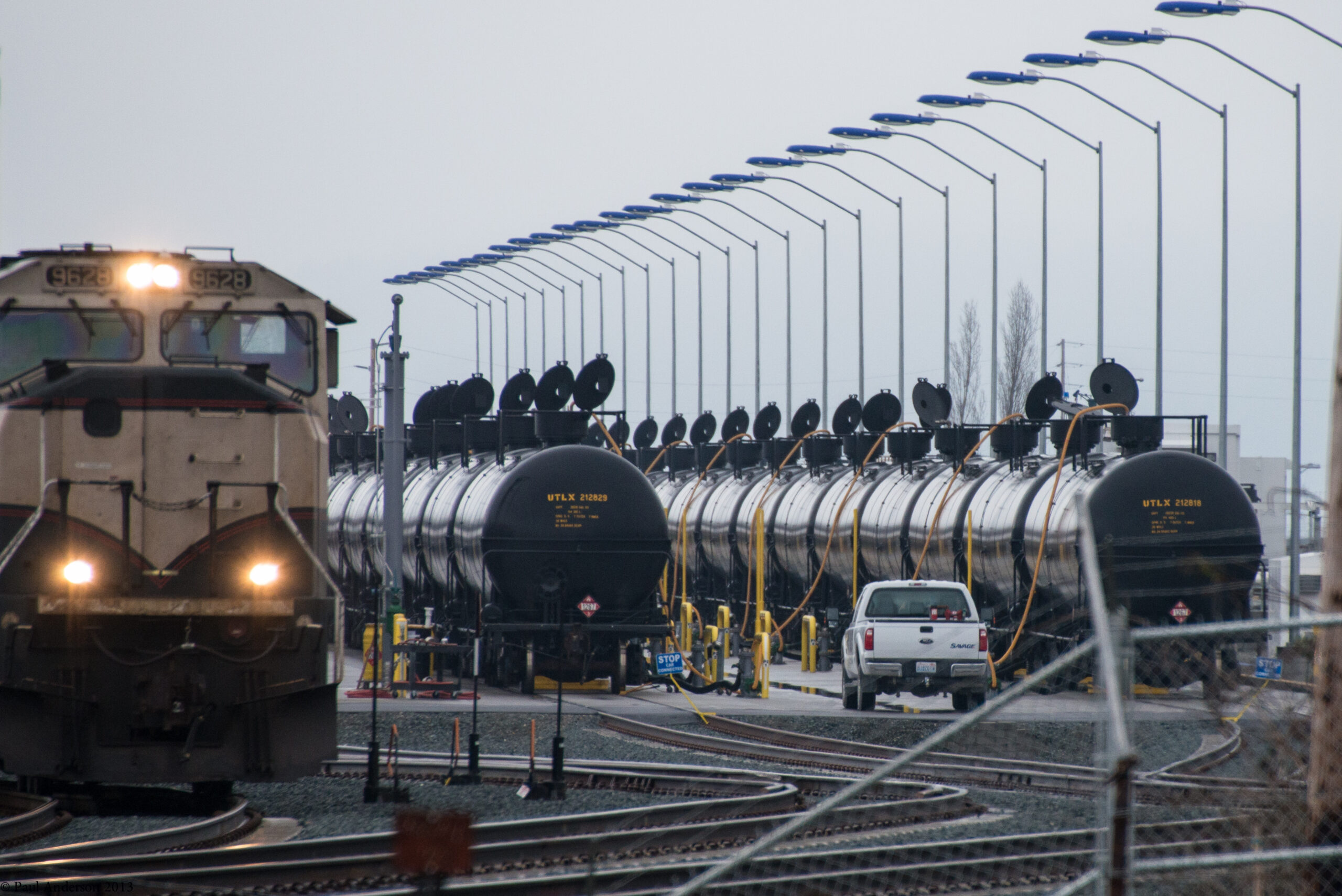
The people in the Musi-Café had no idea what hit them. At about 1 a.m. on July 6, 2013, a train parked on a slope a couple miles away slipped its brakes. Seventy-two tank cars loaded with crude oil accelerated into the town of Lac-Mégantic, Quebec and began to tumble off the tracks, detonating and burning with a force so powerful that it leveled several city blocks. Forty-seven people were killed—most of whom were inside the Musi-Café.

In the months that followed, Lac-Mégantic became a rallying cry, a bloody shirt waved by activists across North America who were growing increasingly concerned about a relatively new phenomenon: ultra-long trains loaded with a peculiar variety of crude oil.

Months later, after several other oil train accidents, Warren Buffett went on CNBC claiming that oil train explosions were “very, very, very, very rare.”

If Buffett sounded defensive, it may have been because he is the single most important person in the world of oil-by-rail, an industry that he dominates and that has proven to be highly profitable for oil companies and railroads—and singularly dangerous to the public.

Read more

Are You Planning to Have Kids? (Part 2)

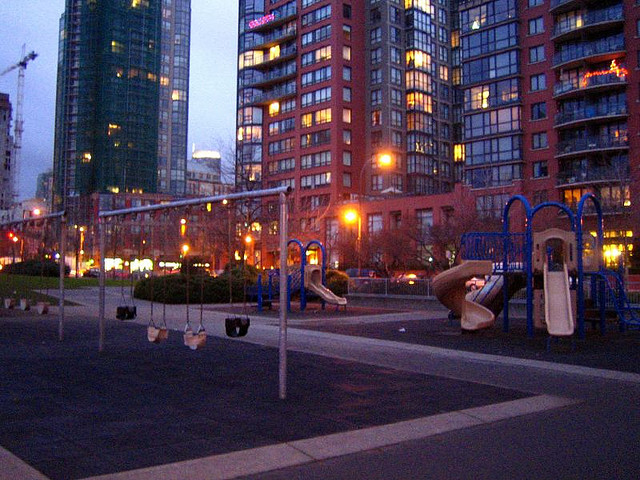
In my last post about Vancouver BC, I outlined the family-friendly policies that have helped make its downtown a magnet for families with children. But how do those policies play out in real life? What works well for families and what drives urban parents crazy?

The University of British Columbia’s planning department has actually devoted a lot of studentpower to answering those questions. They’ve collected extensive feedback from residents and parents in False Creek North, one of the first major downtown redevelopment efforts. Other students have researched how well Vancouver’s urban rowhouses are working for families with kids.

The big picture is that downtown residents and parents really like living there. A whopping 96 percent of False Creek North residents said they would recommend living there. Kids were enthusiastic about their neighborhood, and particularly liked having so many friends and things to do within walking distance. That said, families with children were also more likely to be dissatisfied with their homes, and they were only half as likely to envision staying put for the next five years. So there’s still work to be done.

Based on their input, here are 10 takeaways from Vancouver’s efforts to build family-friendly urban housing:

Read more

Video: The Northwest’s “Bomb Trains”

I’m excited to share this just-released VICE News video piece about the threats of oil trains in the Pacific Northwest: “The Crude Gamble of Oil by Rail: Bomb Trains.” Spencer Chumbley and Nilo Tabrizy put together a top-notch, comprehensive look at how this dangerous “pipeline on wheels” is already affecting our region, interviewing a broad … Read more

There’s Plenty of Room at Hotel California

Pretend you’re the governor of Oregon or Washington, or the head of a key committee in the state legislature in Salem or Olympia. Let’s say you’re convinced: Climate change is real, it’s a huge risk, and we need a fast, smooth transition beyond carbon fuels. Putting a price on carbon is the single best way to nudge the whole economy in that direction.

What do you do? Designing an entire carbon pricing system from scratch… that’s a lot of work! Isn’t there an “off-the-rack” option available? There is! There are, actually. British Columbia’s carbon tax shift is ready to copy. Or, if you prefer to link up with the best US carbon market, California has spent the past eight years building a state-of-the-art cap-and-trade program and writing all the rules and regulations to go with it. Not only that, but Oregon and Washington have already done some of the groundwork for linking to California by contributing to the Western Climate Initiative’s 2010 framework.

Linking isn’t just a way to avoid recreating the wheel. It has a lot of benefits: it can cut the cost of reducing pollution, reduce the risk that emissions will “leak” across state borders, trim the costs of administering the program, and make it simpler for multi-state entities to comply because the rules are the same across borders.

That all sounds great. What do you need to do? Here is a summary of what Oregon or Washington would need to do to link, with comparisons to California’s linkage with Quebec this year.

Read more

Want to see a post-Citizens United America? Look North

Research by Jane Harvey

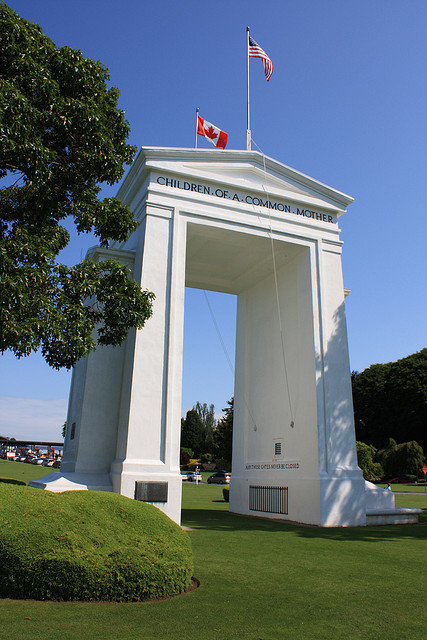
To understand how money corrupts democracy in the United States, especially in the Northwest states, look north to Canada. What you’ll see is that campaign fundraising is radically different on the two sides of the 49th parallel. It hasn’t always been, but it is now. The differences, and how they developed, reveal just how profound the impacts of US Supreme Court rulings have been on the systemic corruption of politics.

On the south side, elected officials spend their lives dialing for dollars. Citizens United and related Supreme Court cases reign: corporations are persons; money is speech; and the only kind of corruption that’s illegal is the kind that actually involves buying votes with money. Candidates spend without limits, as do “independent expenditure” (IE) campaigns such as those orchestrated by super-PACs. Individual contributions to campaigns are putatively restricted, but any fundraising chair worth her salt can find a way to launder funds through back channels. Individual and corporate contributions to IEs are utterly unrestricted, can sometimes be done anonymously, and IEs are not really independent anyway. Almost every political dollar comes from private donors, often from lobbyists; public funding is isolated in a few outposts of good-government zeal such as Connecticut and Maine. Finally, campaigns can and do run for months on end, laying siege to swing voters and blitzing them with television ads.

On the north side, politicians spend their lives talking with voters and governing. They almost never dial for dollars, er, loonies. A recent legislative leader of one of BC’s political parties reports that he focused time and energy on fundraising about twice a week when he was leader. He didn’t dial for dollars. Compare that to spending half of each day on it, as many American politicians do. Fundraising used to be even less time-consuming. A former premier of British Columbia who spent 24 years in elective office reports spending almost no time raising money; his party raised some but he wasn’t much involved. A former member of the Canadian parliament tells much the same story: a group of volunteers raised some money for his campaign, but he personally spent his campaign time, well, campaigning. One former city councilor in Vancouver remembers raising just $10,000 total (a rounding error in an American campaign) for each of his races. He says he never raised a single dollar, not one, outside of campaign season.

Read more

Where Are the Northwest’s Kids?

Once they have kids, families move out of the city and opt for the big house, picket fence, and longer commute. That’s the story we’ve all heard. But the reality is that—at least over the last 12 years—the Northwest’s biggest cities have done a much better job of attracting and retaining kids than their suburban and rural counterparts.

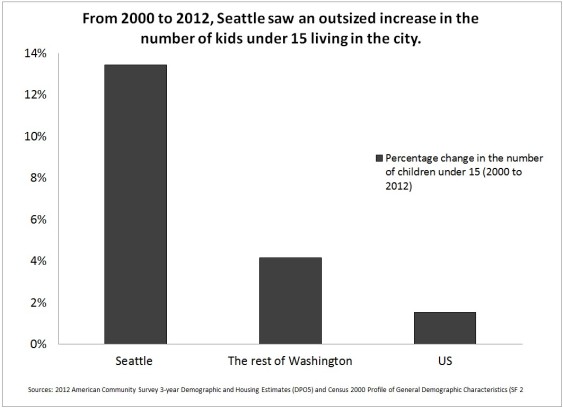
Yes, it remains true that, like most other big cities, Seattle and Portland have a smaller share of kids than their suburban neighbors. In 2012, 13.5 percent of Seattle’s population was under 15, compared to nearly 20 percent for the rest of the state. In Portland, 16.4 percent of the population was under 15, compared to nearly 19 percent for the rest of Oregon. But this “child gap” has existed for decades in Seattle, and it widened the fastest during the 1960s and 1970s. Nowadays, the gap is closing.

Recently, the Northwest’s densest cities have bucked powerful demographic trends and managed to retain families with kids, something few other places have done. From 2000 to 2012, Seattle saw dramatic growth in its number of children under 15, outpacing the rest of the state and the country.

Original Sightline Institute graphic, available under our Free Use Policy.

Read more

Sightline on Vancouver, WA Oil Train Proposal

If you’re following Sightline’s work on Northwest oil-by-rail projects, you may enjoy listening to this radio segment I did this week on KBOO, a community radio station based in Portland.

The piece is around 15 minutes long, and you can listen at this link. I’d like to give a big “thanks” to Old Mole Variety Hour host Laurie Mercier for a well-crafted interview session.

A few hours after my interview aired, the Vancouver City Council passed a strongly-worded resolution opposing the giant oil-by-rail transshipment scheme proposed on the waterfront by oil company Tesoro. Things are starting to get interesting on the Columbia.

Illegal Play

My kid is a rule follower. She would rather cut off her leg than be in trouble, wants stories told precisely the same way every time, lives to enforce playground rules, and for most of her toddler years wanted to grow up to be a crossing guard.

This bugs a person like me. I worry that I’m not providing her with opportunities to test boundaries, develop independence, be resourceful, strike out on adventures, make questionable choices, and have the run of our neighborhood. But as a parent raising a five-year-old in a fairly urban environment, I first really need her to stop forgetting to look for cars.

In the meantime, our default is to head to one of the Northwest’s great public parks, beaches, or playgrounds. Yet my worst fears about her stunted opportunities for play were recently reinforced in this stunning accounting of things that are technically illegal for kids to do there.

Like climbing trees, catching frogs, erecting a fort, turning sticks into light sabers, digging a hole, throwing rotten apples, or making a daisy chain.

Read more

×