Donate Newsletters

Putting the Chemical Witness on the Hot Seat

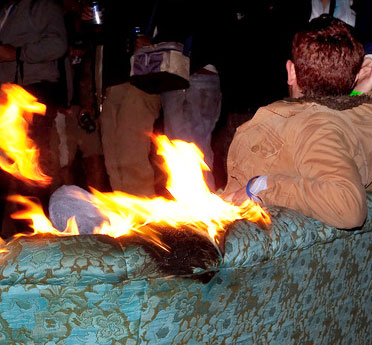
Man sitting on burning couch

Editor’s Note: We’ve said it before: California’s 12-second rule, a state flammability standard for foam-containing furniture, induces manufacturers to load their products with chemical flame retardants. It’s a stupid rule: it contaminates tens of millions of homes across North America with toxic substances — compounds that spread, harming people and animals. Of all the toxic industrial compounds in your body right now, a substantial share are flame retardants that came from foam furnishings — probably a larger share than any other category of industrial compounds. In other words, the 12-second rule is printing out, right now, in the chemistry of your body. But the rule has no compensating benefit for fire safety. The 12-second rule does not save lives in fires. It is useless. That’s what the scientific evidence says. This rule is all pain, no gain.

But in April 2011, a California senate committee voted eight to one to sustain the rule, rejecting the Consumer Choice Fire Protection Act. Eight to one! Liberals and conservatives united to oppose a mild reform that would have allowed manufacturers to satisfy either the unchanged 12-second rule (exposing foam to a candle flame for 12 seconds without it igniting) or a different flammability test, one that relies on the best fire science. What convinced them? We suspect it was the tens of millions of dollars chemical manufacturers spent on lobbying and campaign contributions. But let’s give the legislators the benefit of the doubt. What might they have heard that swayed them?

Sightline Intern Valerie Pacino, a Master of Public Health student, has investigated. She watched every minute of public testimony on the bill (here at 01:18:45 and here) and read all the statements pro and con entered into the official record. She found surprisingly few arguments voiced in support of the 12-second rule and an avalanche of arguments against it.

But she did find one compelling testimonial for the 12-second rule. It was that of a witness from her own university, the University of Washington in Seattle — an argument made by a decorated burn doctor named David Heimbach. Dr. Heimbach has dedicated his life to caring for victims of fire. Lauded by no lesser a humanitarian than the Dalai Lama, Dr. Heimbach was the star witness for flame retardants. His testimony (which you can watch here at 00:05:18) was artful and heartfelt. It was also, as Valerie details below, either deceptive or uninformed. (We asked Dr. Heimbach for a meeting to discuss this issue, but he has not replied.) –Alan Durning

You might think adding slow-to-burn compounds to upholstered furnishings, the largest single fuel load in many homes, would be a worthy precaution, a defense against house fires, and a lifesaver for thousands of people. It’s an understandable assumption, an intuitive one. Though Dr. Heimbach never questions or even explicitly mentions this assumption, it lurks beneath the surface of what he argued in Sacramento. So I checked the science.

Read more

A Desert Oasis

Good news out of Portland last week: local grocery chain New Seasons will open a new store smack dab in the middle of a North Portland food desert.

Food deserts are areas that lack access to fresh, healthy, affordable food. (In urban areas, the USDA defines a food desert as an area where more than one-third of a low-income census tract’s population is more than a mile from a supermarket or large grocery store.)

The neighborhood is—for better or worse—rapidly gentrifying, and a new grocery store (especially one with strong sustainability principles) helps bring an end to a drought of healthy, fresh food.

Why Railroads Care About Coal Exports

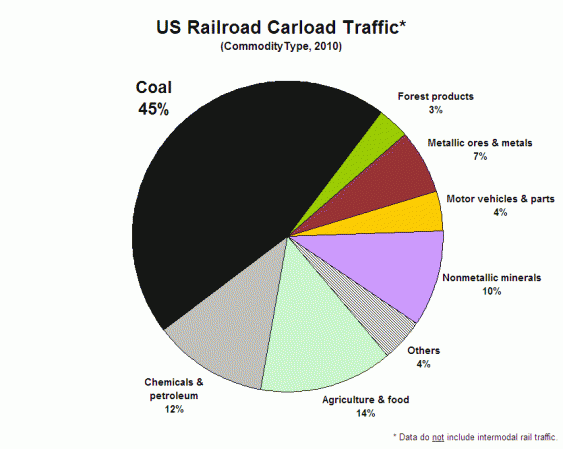
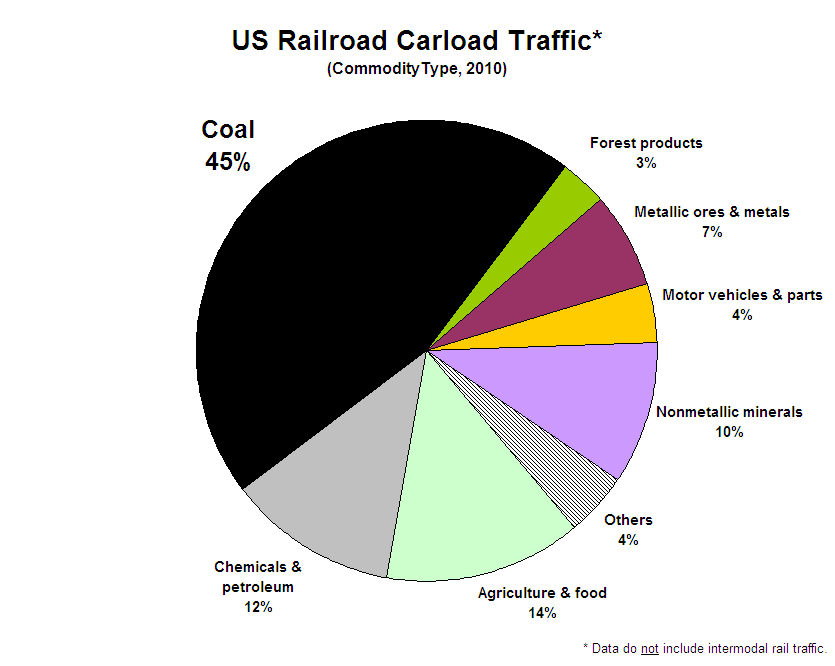
Here are three pictures that help explain why American railways seem to be supporting coal export proposals in the Northwest. It’s because railways are very closely connected to the coal industry. Consider:

Coal so dwarfs every other rail-hauled commodity that it is almost as important as all the other commodities combined. (N/B, this picture excludes “intermodal” freight.)

Read more

Your Wheels, on the Bus

Editor’s Note: As noted in the comments below, Seattle blogger Lynn Hamilton has started a petition on the topic of strollers.

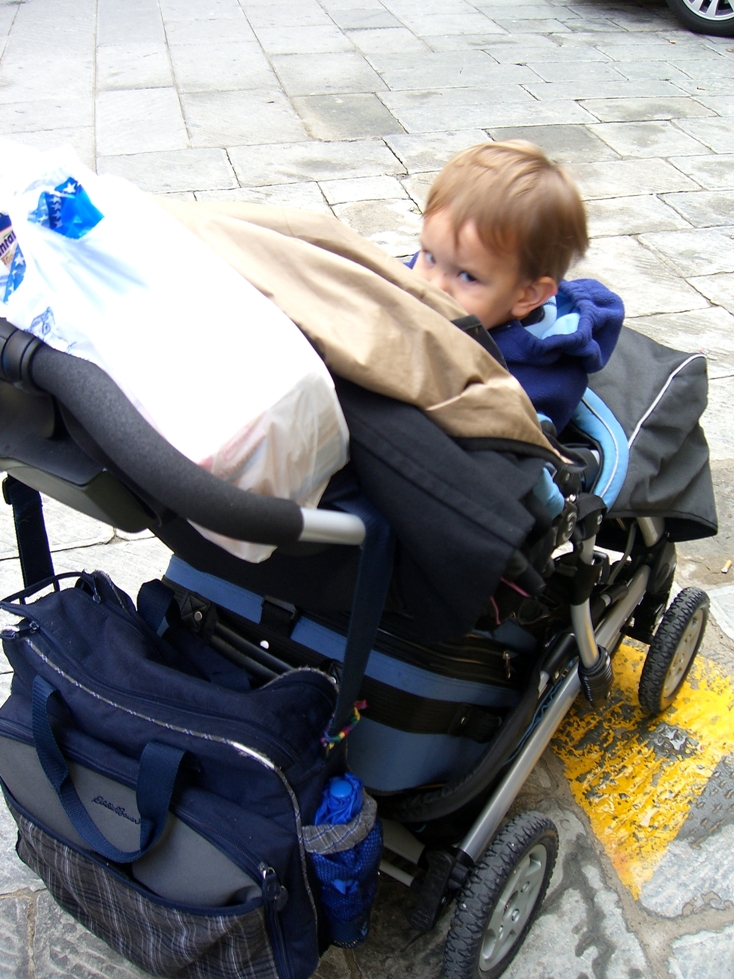
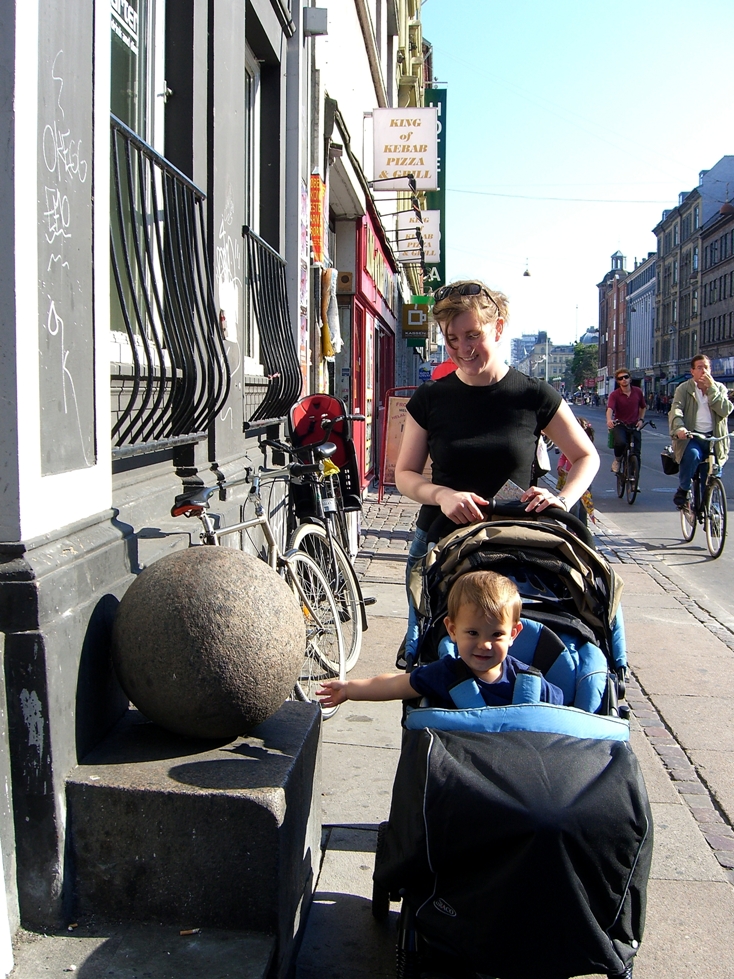
I recall vividly how embarrassed I felt the first time I waited for the bus with my baby boy—he bundled up in his stroller and me expecting the bus driver to welcome me aboard, lowering the wheelchair lift so we could roll on in style. In the stores and sidewalks of my neighborhood, people smiled as we ran errands. They made way for us—slowing so we could pass on a congested sidewalk or holding doors open while we rolled into a shop. Then the bus arrived. Instead of lowering the lift, the driver told me to fold Orion’s stroller. My cheeks burned red as I hastily unpacked—diaper bag, toys, blanket, and groceries—while holding onto my squirming bundle of joy. Then, with one hand, I attempted to fold the stroller and carry the load aboard, knowing that everyone was watching me, passengers cursing under their breaths and the driver reviewing his timetable.

For most parents, an experience like that would have eliminated any thoughts of ever again taking their wheels on the bus. But I had no real choice.

My husband and I had committed to staying in our apartment overlooking The Ave, the main street running through Seattle’s University District. Some parents trade up to a minivan or SUV, but we had sold our two-door Civic. We gained a child and shed a car.

Alyse Nelson

And, in most ways, I loved our car-free life. We explored our neighborhood together. People stopped to greet Orion on the sidewalk. I could point out interesting buildings or window displays. Outside our grocery store, the man selling the Real Change newspaper would always belt out, “Have a great day, little dude!” We soaked in the diversity of the city: new smells, sounds, and people. When we went somewhere in a car, Orion and I were both miserable. Seated in the backseat in his rear-facing car seat, he would often wail.

Read more

The Porous Road Less Traveled

Pervious concrete

Permeable pavement can make old-school road engineers and pavement builders anxious. To them, the idea of water seeping through roads like they’re made of Swiss cheese just doesn’t seem right. Water runs off roads, not through them. Or at least it used to.

In the Northwest, there’s a growing acceptance of the use of pervious concrete and porous asphalt for roads, sidewalks, parking lots, and driveways. The unconventional pavement does a great job reducing the amount of polluted stormwater runoff that damages homes, streams and lakes. Instead of gushing from the roads carrying a slug of toxic chemicals, the water seeps through small pores in the pavement, soaking into the gravel and dirt beneath the road. Some of the pollutants get trapped inside or beneath the pavement, or are consumed by organisms living in the ground below it.

Those who’ve used the pavement praise the technology. Advocates can be found around the region, including a 32-acre eco-friendly development near Salem called Pringle Creek, where all of the roads and alleys were built with porous asphalt.

“It’s pretty remarkable to see water disappear into the street,” said James Santana, vice president of Pringle Creek. “We’ve been really impressed with how effective the streets have been.”

Rice crispy treats
Anna Fischer, Flickr.

The development, which was built in 2007, was deemed “the nation’s first full-scale porous pavement project” by the Asphalt Pavement Association of Oregon.

But fears about the technology persist. Can pavement that’s likened to rice crispy treats to illustrate its pervious nature take a pounding from countless cars, trucks, and buses and survive intact? How long can water seep through it before its pores are clogged with dirt and debris? Is it OK to put a bunch of water underneath a road?

Read more

Useless Northwest Christmas Geography

Here’s my Christmas gift to you: useless regional trivia that you can use to annoy your friends and family this weekend. Below, you’ll find all the geographic place names in the Northwest that include the word Christmas.

British Columbia

  • Christmas Creek (the northern one), flows into Hyland Lake way up north near the border with Yukon Territory.
  • Christmas Creek (the central one), flows into Eagle Creek near Wells Gray Provincial House and east of 100 Mile House. An expansion of this creek is named Christmas Lake.
  • Christmas Hill is just north of Swan Lake in the city of Saanich, a town that also boasts a Christmas Avenue.
  • Christmas Point, nearby, is on the west side of the Finlayson Arm that extends south from the Saanich Inlet near Victoria.
  • Christmas Island is an unofficial name for an island in the Columbia River just south of Revelstoke.

Read more

Five Secrets from the Future of Car Sharing

Editor’s Note: On Tuesday, peer-to-peer carsharing pioneer Getaround announced a $1.7 million Federal Highway Administration grant that’ll bring the service to Portland. This guest post is by Michael Andersen of Portland Afoot, a 10-minute newsmagazine and wiki about low-car life in PDX. Michael adapted this piece from the magazine’s October cover story.

When it comes to Portland next month, peer-to-peer carsharing will be ready to slice and dice car ownership by letting any household turn their own car into a Zipcar.

But to Sightline readers—and to most folks who read my little newsmagazine for transit commuters—the concept of personal carsharing is old news. That’s why this summer, I took a trip straight into the future: south to San Francisco Bay, where the carsharing technology of tomorrow had been on the ground for six months.

Forget the concepts. I wanted to know the nuts and bolts: Who was sharing cars? What were they charging? And how do you report carsharing income on your taxes?

I wound up interviewing carsharing experts up and down the coast. Here’s what I learned.

1) It’ll be available everywhere.

Read more

Oregonians Already Have a “Right to Dry”

Photo courtesy of Susan Taylor

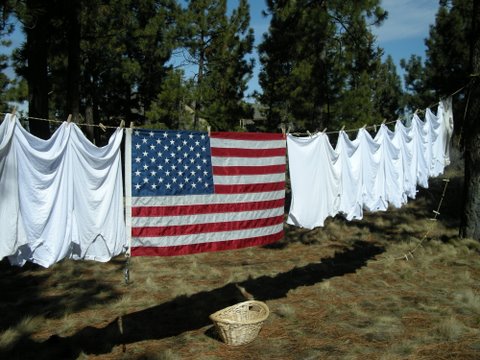
Editor’s Note: Sightline’s map of clothesline bans across the continent already shows 217 communities that forbid solar drying. (Email your tips about other bans to editor@sightline.org.) Legislators in Oregon and Washington and a city councilor in Seattle have expressed interest in taking action since we first published on this barrier to no-carbon laundering. But legislative interest is a far cry from legislative victory. After all, Oregon’s Senate bottled up in committee in 2009 a Right-to-Dry law that had passed the state house easily. The difficulty of enacting new laws makes all the more encouraging this story from Sightline volunteer Jon Howland about a path to the Right to Dry that goes through the courts. We’ve since written an update documenting states where clothesline bans are void across the country.

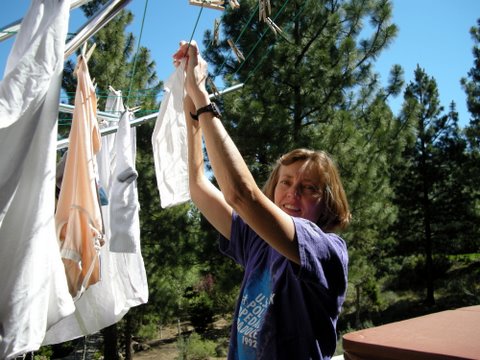
Susan Taylor of Bend, Oregon, may be the poster child of the North American Right-to-Dry movement. For years, she’s been locked in combat with her homeowner association (HOA) over the HOA’s ban on clotheslines. Taylor’s HOA has issued her fines totaling hundreds of dollars and on two occasions, haters of hung laundry even came by moonlight to clip her cord.

Recently, Taylor uncovered something interesting. An obscure 1979 Oregon law may already shield the legality of sunning her wardrobe.

Read more

Video: Coal Export Threatens the Northwest

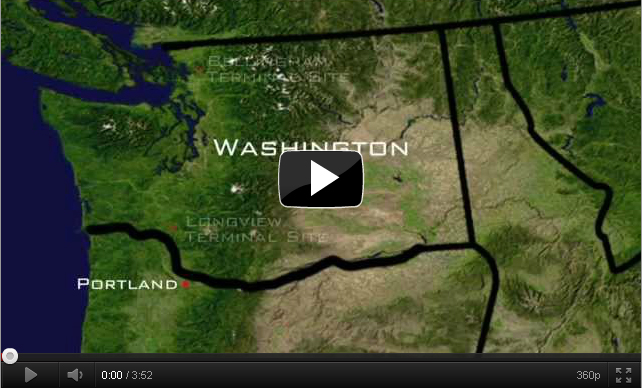
Columbia Riverkeeper has a new video out showing the impacts of proposed coal export terminals in Oregon and Washington. It’s definitely worth four minutes of your time: The video looks at the affected communities, the health impacts of coal dust, and the other impacts in the Northwest. Here at Sightline, we’ve created a new repository … Read more

Grow Your Farmer

In the Northwest, small-scale farmers are the new rock stars. The New York Times writes about them glowingly. Filmmakers follow them around. Lots of people dream of becoming one—from unfulfilled tax accountants to newly minted public policy graduates to carpenters whose jobs dried up in the recession.

The explosion of farmers markets and growing number of mud-spattered entrepreneurs willing to deliver produce or sell you a percentage of a grass-fed cow clearly shows this is by no means impossible.  But the average income from a “beginning” farm in 2010 was a negative $888, according to the USDA. And in a region with such abundant options for buying locally-produced food, it’s easy to overlook the formidable barriers that new farmers have to overcome.

I spent some of my spare time over the last growing season following some of the new farmers at Viva Farms, an incubator in Skagit County, Washington, that aims to give aspiring farmers an affordable place to learn and build their business. It’s also one of the first in the country to serve two different populations with similar problems: 1) newbie career changers and interns coming off organic farms, as well as 2) experienced Latino farmworkers who want to work for themselves. You can read my cover story in this week’s High Country News (a free trial subscription is required) but here are some observations about what I learned.

First off, here’s a quick run-down of the problem:

Read more

×