
Donate Newsletters

Is the Coal Bubble Still Deflating?

It’s funny to re-read the coal news from last year, full of confident “experts” predicting a rebound in international coal prices. Here’s one story, asserting that international coal prices had “hit rock bottom”. And another, predicting a “modest recovery” in coal prices by the end of 2015. And yet another, arguing that Asian coal demand was set for “a robust revival.” … Read more

Grays Harbor Oil Trains Would be Severely Under-Insured

Oil train derailments—and the catastrophic fires that often result—are distressingly common features of contemporary North American life. No fewer than 10 crude oil-bearing trains have derailed and exploded since the summer of 2013. The risks to life and limb are plain enough. Less understood is the risk that these oil trains pose to taxpayers, governments, … Read more

Climate Scientists Are People, Too

As a general rule, scientists are expected to keep their personal feelings to themselves. Scientific detachment is important. Objectivity is the name of the game for sound and accurate findings. But, as Ewan Birney, a computational biologist at Cambridge, wrote in the Guardian not long ago, “The lack of a natural forum for scientists to describe … Read more

Sightline’s Getting a New Look

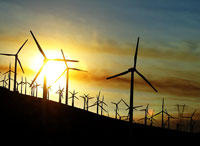
Windfarm at sunset
"Tah-dahhhh!", says Mieko.
“Tah-dahhhh!”, says Mieko.

Readers! Early next week, Sightline Institute will launch a fresh new version of our website. I can’t wait, and here’s why…

A single streamlined site

Many of you don’t even realize it, but Sightline Institute has two sides to its website (for reasons not worth explaining). Both contain important research and information about Sightline, but studying our web traffic showed us that it wasn’t clear to you how to move between the two. Can’t blame ya.

Anyway, no more! The new sightline.org will house all of our research, from shorter articles and commentary to lengthier reports and graphics, as well as our staff bios, contact info, and Sightline Daily news picks, among other things.

Speaking of Sightline Daily

No, don’t worry! We’re not about to change your favorite news round-up. But from now on, “Sightline Daily” will refer only to the news round-up (and its email version). No more blog. No more people citing Sightline Daily‘s research instead of Sightline Institute’s research. No more, “Wait, you guys do more than just that awesome news round-up?” Indeed, friends, we do. So, so, so much more.

Better navigation tools

The new site features clearer navigation menus to access our different research areas and specific series. All these menus stay accessible across every page of the site, so that you can easily jump from learning about what a Grays Harbor oil spill would look like to taking climate talking points from the Pope to checking out 26 (yes, 26!) ways to store your bike to seeing what Sightline staffers looked like circa 1993. (Er… maybe that last one shouldn’t make it through the migration process…)

Read more

Event: Build Small, Live Large

A tiny house with a picket fence.

Curious about small and sustainable housing?

The Build Small Live Large Summit in Portland next month will explore the leading edge of the space-efficient housing movement where design, cost, and care for the environment intersect with the needs of today’s communities. The goal of this one-day summit is to increase the demand for space-efficient housing in the region by informing, inspiring, and connecting those interested in building small. Leaders in this movement will share what’s working and what’s next, including Sightline Institute executive director Alan Durning, who will keynote the event.

  • What: Build Small Live Large Summit.
  • When: November 6, 2015, 8:00 am — 7:00 pm.
  • Where: Portland State University Smith Center (map).
  • Tickets: Early Bird rates end Tuesday, 10/6! Register here. (Registration includes all sessions, exhibit hall, and lunch.)
  • Meet the speakers.

Read more

Listen In: How Oregon Leads on Voting Rights

Last year, Oregon continued its leadership in voting rights by passing the New Motor Voter law and starting to automatically register eligible voters. (California has since followed Oregon’s lead.) Oregon’s Bus Project has been a champion of voting rights—this week on XRAY Radio’s Thank You Democracy, The Bus Project’s Executive Director, Nikki Fisher, and I … Read more

What Is the Jordan Cove Export Project?

An oversized carbon-fuel project may be coming to a small town on the Oregon Coast. A Canadian energy company wants to build a liquid natural gas (LNG) export terminal in Coos Bay, Oregon, to ship tremendous volumes of natural gas overseas. To serve the terminal with natural gas, a pipeline company would build hundreds of miles of pipeline through 72 miles of public forests, 400 water bodies, 700 parcels of private land, and the habitats of 32 endangered species.

The Northwest is becoming a prized location for LNG export development owing to the savings on shipping to Asia compared to other parts of the US. Northwest communities are wondering whether most of the benefits of natural gas will go overseas while the detriments will impact the Pacific Northwest’s environment.

In this article, we take a look at the scope, finances, and political landscape of the Jordan Cove Energy project as an example of LNG development in the Pacific Northwest.

Read more

Latino Voters, Environmentalists at Heart

Editor’s note July 2016: It’s Latino Conservation Week, and to celebrate, we’re re-posting this favorite article from last year. Did you know that fully 74 percent of Latino Americans said setting national standards to prevent global warming and climate change is extremely important to them? Impressive numbers. Read on for more… Most American Latinos might not fit the typical … Read more

Five Things Northwest States Should Know about the Federal Clean Power Plan

Last fall I described how President Obama’s draft federal Clean Power Plan (CPP) gave Oregon and Washington a chance to leap into a clean energy future. The final federal rule is out, and it clears and fortifies the path for states. The CPP is a carbon-pricing powerhouse: it gives Oregon and Washington’s governors the opportunity to use a price on carbon pollution—either alone or in combination with other states—to comply with the federal law.

The Environmental Protection Agency’s (EPA) Clean Power Plan is the progeny of the US Supreme Court’s 2007 holding that the Clean Air Act covers greenhouse gas emissions. The Clean Air Act uses a “cooperative federalism” approach; EPA sets goals for each state. It then lets the states write their own implementation plans for reaching their goal. States must submit plans by September 2016 and comply with the final goal by 2030. Last year’s draft plan aimed to cut nationwide power sector emissions about 30 percent below 2005 levels by 2030, but the final plan estimates it will get down to 32 percent below 2005 levels. While cutting global warming pollution, the CPP will also avoid 90,000 asthma attacks and 3,600 premature deaths.

[prettyquote align=”right”].@BarackObama’s #CPP: Emissions down 32%, 90K fewer asthma attacks.[/prettyquote]

1. The CPP encourages state and regional cap-and-trade programs.

The CPP is more than 1,500 pages long, but the bottom line is: it steers states towards creating interoperable cap-and-trade programs.

Read more

The Thin Green Line Is Stopping Coal and Oil in Their Tracks

[prettyquote align=”right”]”Everybody outside the Northwest thinks that’s where energy projects go to die.”[/prettyquote]

“Everybody outside the Northwest thinks that’s where energy projects go to die.” That’s the reputation our region has earned as an increasing number of proposed coal and oil export projects have encountered ferocious opposition. It’s what the backer of a proposed oil refinery in Longview, Washington, told reporters earlier this year after his company’s stealth proposal was outed by environmental groups.

The Cascadia region has proven to be extraordinarily challenging for those who would turn it into a major carbon energy export hub—so much so that Sightline has taken to calling it the Thin Green Line.

Since 2012, a staggering number of schemes have proposed to move large volumes of carbon-intense fuels through Oregon, Washington, and British Columbia to Asian markets. A recent Sightline analysis shows that proposed and newly permitted energy projects in the region would amount to the carbon equivalent of more than five Keystone XL Pipelines.

But in big ways and small—from Coos Bay, Oregon, to Prince Rupert, British Columbia—the Thin Green Line has held fast. Big energy projects have faced delays, uncertainty, mounting costs…and then failure. A review of these projects makes clear just how successful the region has been in denying permission to dirty energy companies as it stays true to its heritage as a center of clean energy, sustainability, and forward thinking.

Read more

×